May 21, 2006

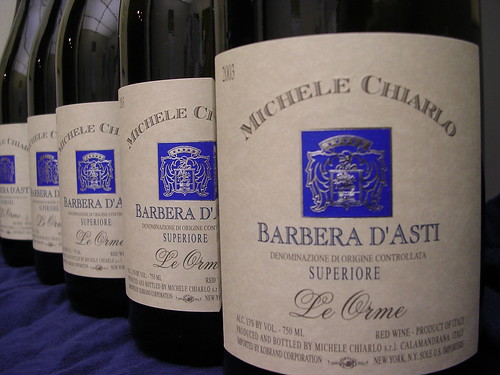
Michele Chiarlo Barbera D’Asti Superiore Le Orme 2003

Michele Chiarlo Barbera D'Asti 2003

On the nose: Although this is an amazingly drinkable wine, especially for the price, the nose it not very impressive. You can detect some red fruit, but the aroma is light.

On the palate: The Barbera grape, which hails from the Piedmont region in Northern Italy, is known to produce a wine with high acidity. Aging the wine in oak, though, (six to eight months in this case) helps to balance out some of the acidity. This light bodied red starts off with bright cherry and raspberry flavors. Although there’s a hint of vanilla from the oak, the wine displays a refreshingly tangy and zesty acidity. The finish is bone dry.

On the wallet: This wine is an incredible value. The PLCB offers a lot of inexpensive wines, but the gamble often doesn’t pay off. This time it did. The Michele Chiarlo goes for a mere $11.99. You are getting a lot for your money, and it will be hard to find a wine this good for the same price or less.

On the table: Typically, oak-aged Barberas are rich and should be paired with more fuller flavored meat dishes. There is not enough oak in this wine to take it to that level, but lighter style Barberas, such as this one, are more versatile and perfect with lighter fare. It's best slightly chilled.

Read More....

May 14, 2006

Vintage Wine Bar and Bistro

Vintage BannerNo one can dispute that the Philadelphia restaurant scene has come into its own. Yet, there are certain types of establishments that are ubiquitous in other cities but noticeably scarce in ours. The wine bar is one of them. The recent opening of Vintage Wine Bar and Bistro, however, goes a long way to filling this void.

At Vintage, the entrepreneurial spirit is flowing almost as much as the wine. Owners Jason and Delphine Evenchik are veterans of Philadelphia’s restaurant scene who decided to open a place of their own; Jason worked at Le Bec-Fin and Delphine was the Assistant Manager of Caribou Café. In addition to having the experience, energy and street cred for this venture, the Evenchiks also had the courage to use designers they found in a nontraditional forum—craigslist. And it paid off. One of their designers, Vin Marshall of T.E. Motorworks, Inc., fabricated an eye-catching, signature chandelier: a multi-tiered wrought iron frame with collage of empty wine bottles carefully arranged upside down around the edge of each tier. It may steal your attention when you enter the room, but ultimately it reminds you of what you’re there to do—drink wine.
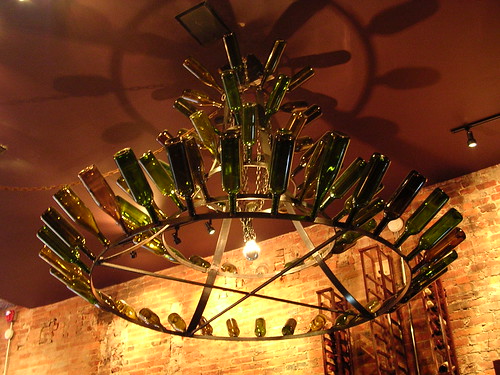
Vintage chandelier

The meticulously crafted wine list is even more impressive than the chandelier. The owners have successfully managed to assemble a broad and diverse wine list without sacrificing any depth. There is something on the list for everyone and, at the same time, the wines are compelling enough to have been hand picked from someone’s private wine cellar. New wines are added frequently, guaranteeing fresh surprises on return visits. As if all of that wasn’t enough, the wines are remarkably affordable. Most glasses are between $5 and $8, and bottles, on average, run in the $30 range. Another small but incredibly valuable feature of the list is that each wine has tasting notes. Not only does this allow you to preview the wines before you drink them, it also educates you on how to identify what you’re tasting, giving you the tools you need to become your own wine critic. If you get stuck on what to choose, the wait staff is skillful at recommending something you’re bound to enjoy.

On my first visit to Vintage, this time with a friend of mine, I instinctively went for a glass of the elusive Mark West Pinot Noir 2004 ($8). The Mark West had a pleasant red fruit nose with ripe raspberry on the palate and a hint of chocolate on the finish. Our server recommended that I try a glass of the Michel Picard Cote-du-Rhone 2003 ($7), which I thoroughly enjoyed. This is a refreshing, light-bodied red, perfect for summer quaffing. The fruit in this wine is mostly on the nose, which has a soft blueberry aroma. Strong tannins grab you in the beginning, but then gently smooth out on the back and sides of your tongue for a warm, velvety finish. I enjoyed the Picard so much that I stubbornly stuck with it on my second visit to Vintage, this time with my wife. She had a glass of Ironstone Obsession Symphony 2004 ($8), which I sampled. The symphony grape is a cross between the Muscat of Alexandria and the Grenache Gris. The result is a semi-sweet white wine that has a powerful nose of peaches and tropical fruit and a light, crisp, non-oak finish.

The food menu consists mainly of small plates designed to accompany the wine. In the tradition of the authentic French bistro, daily specials are written on small chalkboards that the servers ceremoniously bring to your table. Over my two visits to Vintage, I have sampled many of their small plates (seven, to be exact), so given that I’ve already breached blogging etiquette with the length of this post, I may as well go for broke and give you all seven.

The “must have” dish on the menu has to be the Brie en Croute ($12)—baked brie wrapped in a light puff pastry served with caramelized pear and carambola (a/k/a/ star fruit). This filling, decadent delight is served with bread. The pear and star fruit are more than just garnishes. The star fruit, in particular, elevated the brie to a completely different level. Its tangy, succulent juices complemented the rich, savory brie in a unique way.
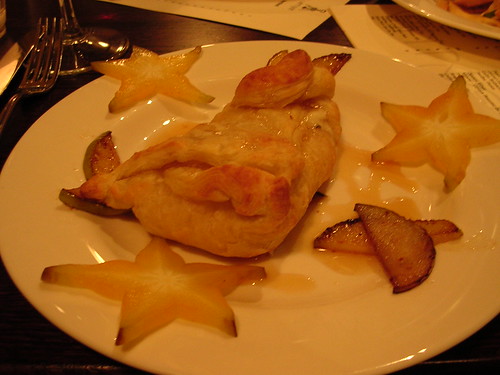
Brie en Croute

The North African Spiced Lamb kefta ($12) consists of ground lamb spiced with a variety of North African spices skewered and grilled and served with mint cilantro tzatziki. Despite its name, this dish is extremely safe. The North African spices used here are light, mild, and incredibly subtle (almost too subtle); adding, at most, a bit of sweetness to the juicy lamb. Cilantro has earned a reputation for being overwhelming at times. But that’s not the case here. The chef was careful to add just the right amount to give the cool tzatziki a light, delicate accent.
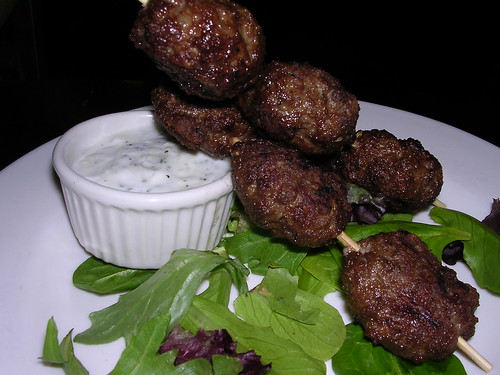
North African Spiced Lamb kefta

The Goat Cheese Plate ($15) was one of the daily specials. It came with three cheeses, going clockwise from one o'clock: Morbier, Capri and Cypress. The Morbier (a cow’s milk cheese that was a last minute replacement) was my favorite; sweet, creamy and deliciously nutty toward the middle and end. Coupling the Morbier with a slice of pear seemed to amplify the nutty flavor and to convince it to appear closer to the beginning. The Capri (which, if the spelling is correct, is an American goat cheese) was the least adventurous of the three, but still enjoyable; creamy with an earthy finish. The Cypress (a brand name, I believe) was earthy and tangy; pairing this with the sweet fig added some colorful balance.
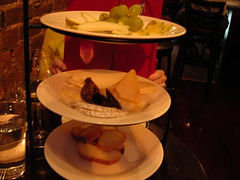
Goat Cheese Plate Chacuterie Plate

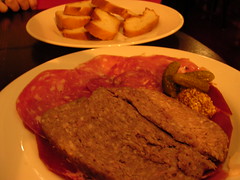
The Chacuterie Plate ($14) contains thinly sliced Parma prosciutto, soprasetta and pate de campagne garnished with Cornichon and whole grain mustard. This pate is very accessible. It is a coarsely ground traditional French country pate that is light and mild with warm garlic flavor and a short, pleasant aftertaste.

The Caesar Salad ($7.50) was light and enjoyable. The house made croutons highlight this dish. The croutons appear to have been pan fried in olive oil, making them light, crispy and addictive. The salad had only a delicate whisper of anchovy, which was curious for a Caesar but not necessarily disappointing. The manchego cheese, however, was a puzzling choice. This cheese is mild and was difficult to isolate through the creamy Caesar dressing, so it didn’t appear to add anything to the dish.

For those with a heartier appetite, there’s the Vintage Burger ($11)—a certified angus burger topped with apple wood smoked bacon, roasted red pepper and shaved manchego served with Belgian fries and a truffle smoked tomato aioli. Based on the small taste I had, the burger was respectable and satisfying, especially the sweet, smoky bacon. The truffle smoked tomato aioli, however, unexpectedly stole the show. The distinctively rich and earthy truffle oil is explosive, but not overpowering, and pairs nicely with the garlic in the tomato aioli. Although the Belgian fries and aioli should continue to be paired with the burger, they also deserve separate billing on the menu.
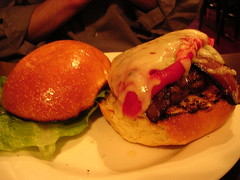
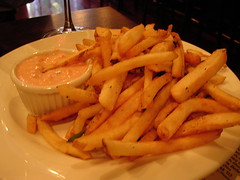
That's a tasty burger The aioli's truffle-icious!

The Chocolate pot de crème ($8.00) was listed as one of the daily specials, but I’m hoping it becomes as much of a regular as I plan to be. The cream clearly is hand whipped. Beneath the cream is a sinful layer of rich, surprisingly creamy caramel. Normally, I prefer an unencumbered pot de crème, but because caramel itself was surprisingly creamy it blended seamlessly with the rich chocolate.
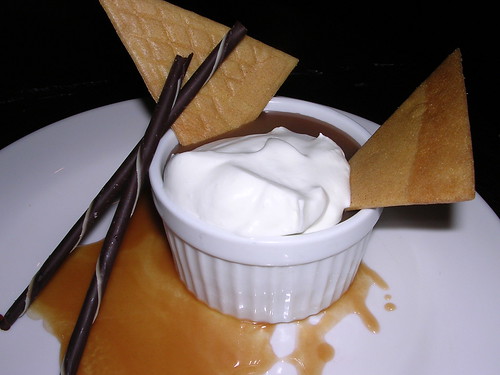
Chocolate pot de creme

Like its wine list, Vintage’s food menu strikes a good balance. It has plates that are safe enough to give the menu a wide appeal and yet it also has enough color and authenticity to satisfy even the most discriminating foodies and keep them coming back for more.

Vintage
129 South 13th Street
(215) 922-3095

Read More....
May 04, 2006

Philadelphia Wine Festival 2006 Wrap-Up

Congratulations and thanks to the PLCB and Philadelphia Magazine for successfully organizing this event. The place was packed. It was challenging at times to make your way down the aisles and to the tasting tables. Even though I arrived early, some of the more popular wineries were already starting to run out of wine. Given the ground I was hoping to cover, I didn't have time for detailed note taking. So, for what it’s worth, here are a few quick, skeletal thoughts on the wines at the festival that made my Greatest Hits List:

  • Silver Oak Napa Valley Cabernet Sauvignon 2001 ($99.99). I had been looking forward to enjoying Silver Oak ever since I learned it was participating, and their wine delivered in a big way. Ponderous. The nose included light notes of cloves and oak. Rich caramel on the palate. Long finish.

  • Chateau Palmer 2003 (Margaux) ($147.99). Palmer is a Third Growth Bordeaux. For this reason alone it should have been on everybody’s dance card. Spicy nose. Medium body. Dark fruit. Firm tannins, but well balanced and smooth.

  • Stag’s Leap Wine Cellars Fay Cabernet Sauvignon 2002 ($74.99). Lavender and violets on the nose. Dark berries on the palate. The warm tannins are the centerpiece of this wine—soft, silky and seductive.

  • Cakebread Cellars Cabernet Sauvignon 2003 ($53.99). This was a popular table, as I suspected it would be. Even though I managed to elbow my way to Cakebread’s table by 6:40, I watched them pour the last of the Cab right after I had my sample. Dark berry and chocolate flavors. Peppery accents.

  • Heitz Cabernet Sauvignon Martha’s Vineyard 2001 ($134.99). According to the program, this wine was reserved for the VIPs, so I feel fortunate to have sampled this gem. I was impressed that Kathleen Heitz Myers, the President of Heitz Wine Cellars, actually was onsite pouring the wine. Very floral nose with notes of cloves. Dark fruit and spice. Balanced tannins.

  • Joseph Phelps Cabernet Sauvignon 2003 ($50.29). Plum and dark berry. Finish is long and complex with a savory / umami taste.

  • Best Wine: Unquestionably, the Champagne Krug Grande Cuvee NV ($152.99). Stunning. Fresh, crisp and dry. Bold notes of roasted nuts with light buttery accents. Very complex and elegant. Worth the price of admission even if this would have been the only wine in the room.

Other Highlights:

  • PA Wines. The two Pennsylvania wines I sampled were impressive and surprisingly drinkable. I tried Chaddsford’s Merican 2001 ($29.09) and Blue Mountain’s Blue Heron Meritage 2003 ($22.49), both of which are American versions of Bordeaux. Head-to-head, Chaddsford edges-out the Blue Mountain on taste. But the price points for these wines are bafflingly high, especially since there are numerous true Bordeaux wines available that are cheaper and more refined.

  • Coolest Wine Name: Oculus. Part of the compelling “Wines of Canada” table. I know, oculus is Latin for eye and it’s the name of the opening in the dome of the Pantheon. But, come on, it’s got a heavy metal ring to it. Probably not the most polished wine in the room (a bit jammy, actually), but you felt like a bad ass drinking a wine named Oculus.

  • The Food. The cheese and fruit disappeared quickly and the lines for the hot hors d’oeuvres were too long. Toward the end of the evening, though, I wandered to the side patio where the line at the Canadian foie gras table was curiously short. I soon found out why. This pate was intense, overwhelming and unnaturally gamey, which would have been fine had the experience stopped there. It didn’t. The aftertaste, literally, was nauseating. And it only got worse and more intense the longer you went without rinsing your mouth. It may be a while before I can partake of anything Canadian. Except, of course, the Oculus.

Final Thoughts:

  • Next year, spend the extra coin for the early VIP Tasting. You’ll have more time to enjoy the more popular wines before they run out. Plus, you’ll be treated to special selections, like this year’s infamous Joseph Phelps Insignia 2002, that are not available to the regular attendees.

  • If you plan to buy anything at the on-site PLCB store next year, do it early. Apparently, there were a lot of impulse buyers at the festival. The Silver Oak, for example, sold out quickly.

  • Normally, it would cost $715.23 to experience the seven wines on my Greatest Hits List. I experienced all of them, plus many others, for only $95. Not too shabby.

Read More....

May 01, 2006

'Scuse Me While I Spit This Wine

The 2006 Philadelphia Wine Festival is tomorrow, so I thought it would be useful to write about the art of wine spitting. Since childhood we’ve been programmed not to spit at all; spitting is offensive, disgusting and messy. Not to mention how wasteful it is to spit out food or drink (there are starving people in Africa, after all). So, it’s sort of ironic that at an allegedly high-brow event such as a wine tasting spitting this expensive liquid is not only tolerated, it’s almost required.

Spitting wine at these events does make sense, though. The reason you spit instead of swallowing the wine is to remain sober. If you’re there to actually taste the various offerings, you want to keep your wits about you so you can appreciate (and remember) what you’re tasting. Otherwise, you just spent $95 to get drunk on about $10 worth of wine. Talk about a waste.

But even if you manage to reprogram yourself to get over the indignity of the act of spitting, the question remains: How do you do it without making a mess? The most practical advice I’ve read comes from a 2002 Slate article written by Michael Steinberger entitled “Cold Shower: How to Spit Wine Like the Pros.” Steinberger recounts his meeting with Daniel Johnnes, the wine director at Montrachet, who gave him the following step-by-step advice:

It is essential, he said, to put the right amount of wine in your mouth; he recommends between one-quarter and one-half ounce. Once you have tasted the wine and are ready to expel it, you pucker your lips, tighten your cheeks, and press your tongue up against your top teeth, broadening the tongue so that it extends past the molars on each side. This pools the wine between the top of your tongue and the roof of your mouth. The key, Johnnes says, is muscle control and force: You need to generate sufficient power to push the wine out while maintaining your form throughout the process.

Easier said than done. Clearly, this technique is something that should be practiced at home before debuting in public. And remember: if you can’t spit well at home, it’s probably best not to do it at all. Because, regardless of how much we like wine, nobody wants to be on the receiving end of a Chardonnay shower.

Read More....

April 30, 2006

Striking Developments

At the beginning of April, the drivers who deliver alcohol to a PLCB warehouse near the Philadelphia International Airport and then to local stores went on strike. You may not have noticed this because it didn’t get much press and because the PLCB had its stores stock up to six-week supply levels in anticipation of the strike. Notwithstanding these efforts, the specialty store on Chestnut was running out of certain types of wine only two weeks into the strike.

The good news, I understand, is that the strike ended last week. The bad news, however, is that it may be déjà vu all over again. Word on the street was that the folks who load the trucks may strike this week. If this is true, hopefully everything will be resolved with little or no interruption in distribution. Keep an eye on your local PLCB store's shelves.

Read More....

April 23, 2006

Chef Vetri to Open L'Osteria in North Philly

The Philadelphia Inquirer reported today that Chef Marc Vetri of Vetri Ristorante will be opening a second restaurant around Thanksgiving; it will be located at 640 N. Broad St. This “upper end casual” restaurant will be called L’Osteria and will feature a wine bar and a wood-burning oven.

Read More....

April 22, 2006

W.H. Smith - Pinot Noir Sonoma Coast 2003

On the nose: This wine is a lesson on why it’s important to use the proper glass for the wine you are tasting. This wine has a high alcohol content—14.5%. I made the mistake of using a Bordeaux glass for this wine (hey, we all cut corners on occasion). The narrower opening of the Bordeaux glass apparently stove-piped the alcohol and all I smelled at first without any swirl was nail polish remover. I take full blame for this; this was my fault, not the wine's fault. After this wine was placed in the proper glass, a gentle swirl exposed a wonderful aroma of warm plum, cherry and slightly peppery notes. Respect your wine; put it in the proper glass and give it a swirl.

On the palate: This is a well-made, mid to full-bodied wine. You’re greeted with a huge, creamy mouthful of plum, cherry, a bit of raspberry. A small hint of licorice echoes in the background as the wine decants. The wine has a welcomingly dry and somewhat short finish. Toward the end, the back of your tongue will be tickled by its refreshingly crisp acidity. But the long-lasting tannins are slightly harsh for a pinot noir, which distances this wine from the sensual experience you expect from this delicate variety. Under California law, a producer can add up to 25 percent of another variety to a pinot noir without revealing it’s a blend. So, it’s possible that this may be a blend (possibly with cabernet sauvignon, if I had to guess), which would explain the strong tannins. But I could be wrong.

On the wallet: W.H. Smith is a small California winery. I have read that this particular wine is both W.B. Smith’s largest production (fueling my suspicion that it’s a blend) and its least expensive offering ($23.99), which appears to be the type of wine the PLCB concentrates on in its specialty stores. Truthfully, this wine is a great deal; I’ve seen it listed on the Internet for as high as $37.99. But the bargain only serves to remind you that the Sonoma Coast pinot noir is the only W.H. Smith wine the PLCB will allow you to sample.

On the table: This wine is not fruity enough for lighter fare. And although it’s tannic structure is not delicate enough for salmon, pork or veal, this wine should stand nicely with beef and game.

Read More....

April 18, 2006

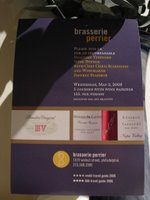
Brasserie Perrier Hosts May 3, 2006 Wine Dinner

May is shaping up to be another great month for foodies in Philadelphia. In addition to the Philadelphia Wine Festival on May 2, Braserie Perrier is hosting a special wine dinner on May 3, 2006 with Chef Chris Scaraduzio and winemaker Jeffrey Stambor featuring wines from Beaulieu Vineyard. Five courses with wine parings at $135 per person.
Brasserie Perrier
1619 Walnut Street
(215) 568-3000

Read More....

April 13, 2006

Wine Drinkers Have Lower Risk of Lung Cancer; Beer Drinkers...Not So Much

The studies were done by Canadians, eh. Wait...Canadians dissing beer? Slate’s Human Nature column breaks it down:

Beer may increase your risk of lung cancer—but wine may lower it. In one study, "after smoking was discounted, drinking up to six beers per week increased the risk of lung cancer by 20 percent, and by 50 percent for seven or more beers consumed in the same period." In another study, "beer appeared harmful to men who did not eat fruit and vegetables regularly while men who drank wine saw their lung cancer risk drop by 40 percent, and women by 70 percent." Interpretations: 1) Beer causes cancer; wine prevents cancer. 2) Beer drinkers eat fried food, which causes cancer; wine drinkers eat vegetables, which prevent cancer. 3) Wine drinkers, being richer and better educated than beer drinkers, take better care of their bodies in lots of ways.

Read More....

April 11, 2006

I'm Famous!

Well, they say you always remember your first. So, my sincere thanks to Philadelphia Will Do for linking to my April 10 Wine Spectator post.

Philadelphia Will Do honed in on what I believe is the primary drawback of the PLCB’s distribution system—limitations on our choice of wine.

To be fair to the PLCB, though, in the instance of the 2002 Mark West Pinot Noir Russian River Valley, it IS possible that the PLCB did have some at one time and wines from the Russian River Valley ARE produced in limited quantities. But that only serves to illustrate the criticism that Philly Will Do and I share—the PLCB’s bulk “buying power” model often doesn’t give you the opportunity to experience some of the smaller, more popular productions, and the PLCB’s draconian limitations on direct shipment prevent you from getting them on your own.

Thanks again to Philadelphia Will Do. Also, thanks to Philly Future for listing me on their blog roll.

Read More....

April 10, 2006

Philadelphia Restaurants Featured in Wine Spectator

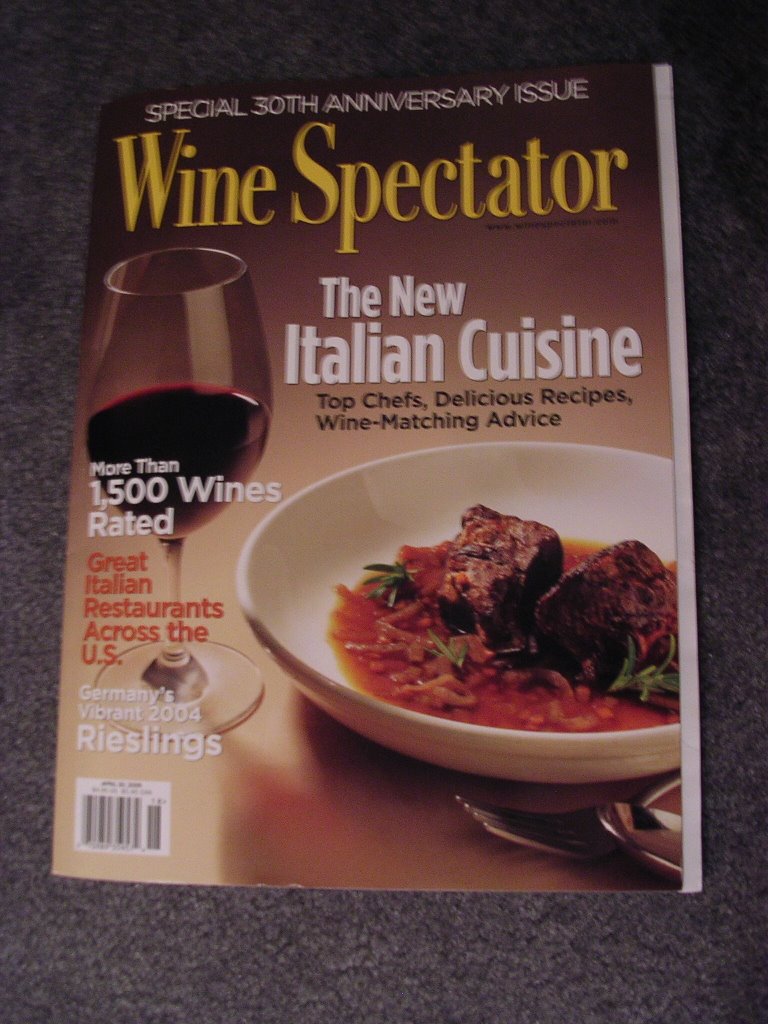
This month’s issue of Wine Spectator features an article by John Mariani entitled “Old Meets New in Philadelphia.” According to the article, Philadelphia’s diverse neighborhoods are giving rise to some very personalized restaurants. Here are a few highlights:

  • Mariani focuses on four of Philadelphia’s finest: Barclay Prime, Bliss, Gayle and Striped Bass. And yes, he mentions BP’s infamous $100 American Wagyu cheese steak, which comes with (as he says) a “slab” of foie gras and a half-bottle of Veuve Clicot.

  • Mariani also gives a shout out to Farmicia, Estia, El Vez and Amada (an authentic tapas bar I’m looking forward to trying).

  • The article laments the cost of wine in some of the profiled restaurants. Mariani lays most of the blame for this on Pennsylvania’s restrictive state-controlled wine distribution system. I am glad Mariani gave the cost issue some attention. However, I think it needs to be put into context, which will do in a later post.

  • Mariani mentions having a glass of 2002 Mark West Pinot Noir Russian River Valley ($13) at Striped Bass, though it’s not clear whether he liked it. I recently had this wine (for less than $13 a glass, I believe) at two other Stephen Starr restaurants—Washington Square and The Continental at 2nd and Market—and I enjoyed it. I haven’t had enough of this wine to be able to write anything thoughtful about it; the PLCB will not be getting any more in (though it’s not clear that they ever really had any available for consumers) and the winery told me it’s all gone. I recommend hitting one of these Stephen Starr restaurants and trying a glass while they still have some left. My only advice is to ask them to put it in the proper glass. The Continental, unfortunately, served this wine in a chardonnay glass and it never had a chance to open up.

In addition, Wine Spectator’s feature article, “The New Italian Cuisine,” profiles, among others, Philadelphia’s chef Marc Vetri of Vetri Ristorante for his innovative approach to Italian food. Also, Chef Vetri shares his recipe for Asparagus Crespelle with Balsamella Sauce.

Read More....

April 09, 2006

Feudo Arancio – Nero d’Avola 2003

On the nose: At first, it’s mostly licorice and anise. With patience and a lot of swirling, you can coax a little fruit into making an appearance.

On the palate: This is a full-bodied and relatively one-dimensional wine. I’m used to licorice and anise being faint, background notes that add layer of complexity. Here, however, it takes up the entire stage. At first, the licorice / anise flavor bullies its way out of the bottle. It is dominant and overwhelming. If you allow the wine to breathe, the licorice and anise will spread out enough to allow some of the fruit to be noticed. However, the flavors are so densely packed together and the finish is so abrupt that the fruit does not have much of a chance to say anything meaningful. A licorice aftertaste seems to ghost around long after you’re ready to move on.

On the wallet: This wine was on sale for $8.99. If you really, really like licorice and anise, this wine is a steal. It’s unlikely that I’ll buy another bottle.

On the table: The bottle recommends pairing this wine with risotto, pasta, red meats, game, lamb and seasoned cheese. I don’t think the wine is that versatile, however. Because the licorice and anise is as heavy as it is, I would not recommend experimenting with anything other than red meat or pizza. And even then, you’ll need to decant for quite some time to give this wine a chance.

Read More....

April 08, 2006

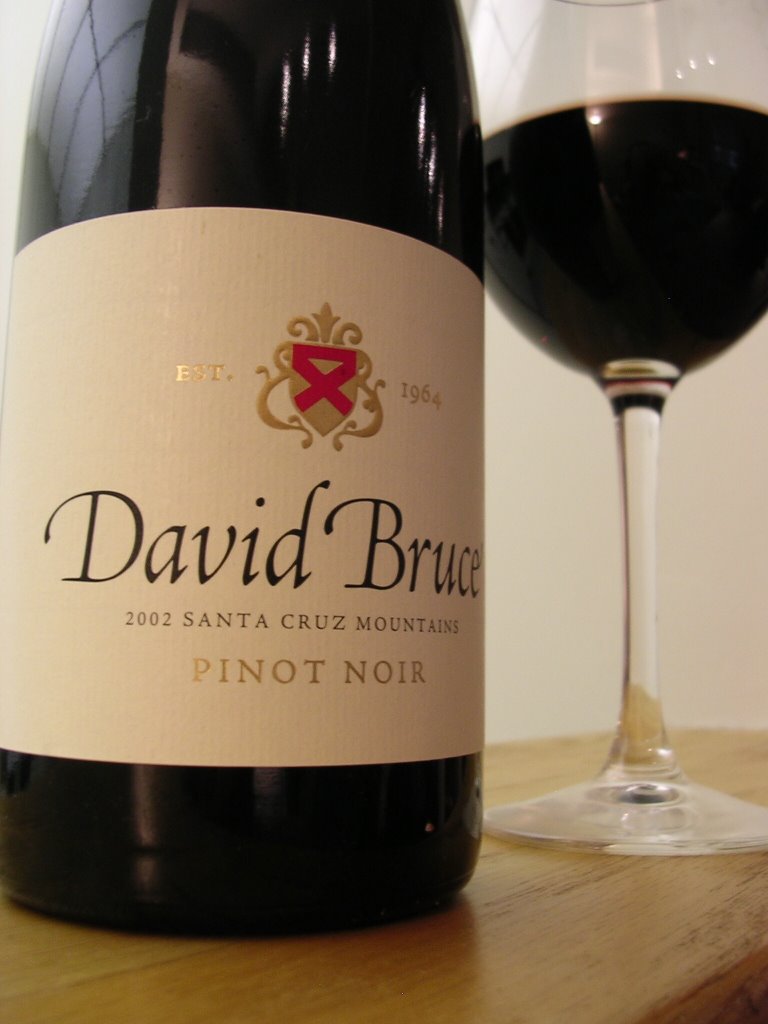
David Bruce - Pinot Noir Santa Cruz Mountains 2002

On the nose: This wine has red berry, floral and faint earthy scents.

On the palate: This is a complex, medium to full-bodied pinot noir. In addition to the forward red berry flavor, you can taste notes of vanilla and mineral. On the finish, an unexpected and exciting hot pepperiness emerges and lingers long on the tongue. Very bold.

On the wallet: The PLCB charges $30.99. The complexity of this wine makes it worth the price, although a quick Internet search revealed that this wine can be found for as much as $3.00 less in New Jersey. The PLCB offers this as a specialty wine, which means that the wine has a limited availability and usually can be found only in the PLCB’s Premium Collection Stores. You may have a rough time finding this wine—I just bought the last two bottles at the Wine and Spirits Store on Chestnut Street, and according to the PLCB’s Product Catalog database, there are no stores in Philadelphia County that have any bottles left.

On the table: This pinot noir is elegant enough to be paired with pork and veal. Given this wine’s intensity, however, I’d also feel comfortable drinking this along side red meat.

N.B.: This is NOT David Bruce’s Pinot Noir Santa Cruz Mountains Estate Bottled 2002, which Wine Spectator rated 92 and listed in its January 2006 Ultimate Buying Guide issue. The PLCB, apparently, does not carry the “Estate Bottled” version. This illustrates how important it is to pay attention to the label.

Read More....

April 07, 2006

Philadelphia Wine Festival 2006

The 5th Annual Philadelphia Wine Festival will be held on May 2, 2006 at The Cruise Terminal at Pier 1. VIP Tasting ($200) starts at 5:00 p.m. The Grand Tasting, i.e., general admission ($95), takes place from 6:30 p.m. to 9:00 p.m.

The list of participants is long and impressive; over 100 wineries are scheduled to attend, including notables such as Joseph Phelps, Silver Oak and Chateau Palmer.

The Pennsylvania Liquor Control Board will operate an on-site store specifically featuring wines sampled at the event. A silent auction will benefit the Pennsylvania Academy of the Fine Arts.

For more information and to purchase tickets, click below:

Philadelphia Wine Festival 2006
The Cruise Terminal at Pier 1
(at The Navy Yard)
5100 South Broad Street
Philadelphia, PA 19002

Read More....

April 06, 2006

Bistro D'Oc (Washington, D.C.)

I was in Washington, D.C. a few weeks ago for a conference and I got the chance to have dinner with a couple who are among my and my wife’s closest friends. They are fellow foodies who recently moved to D.C. They recommended that we eat at a French restaurant they found that had quickly become one of their favorites—Bistro D’Oc.

The restaurant is casual, unpretentious and has the atmosphere of an authentic Bistro. The daily specials are written on a large chalk board that the server walked over to our table. The simple wood furniture and worn hardwood floor give it a comfortable, Old-World feel. Importantly, there was no rush to finish the meal. My understanding is that the restaurant occasionally draws in international students from a nearby youth hostel, which certainly would add even more authenticity to the experience.

The first thing to hit our table was a bottle of the house cabernet sauvignon, a 2003 Domaine la Rosiere. This wine comes from a small winery in the Languedoc region and it was amazing. This wine was robust. It had a solid, well-balanced tannic structure with a red berry flavor and just a hint of spice.

I started off with the Chevre Chaud, a salad with beets and hot Vermont goat cheese and olive oil. The dressing had a note of lemon and, although it made the salad light and refreshing, the citrus seemed to overpower the beets.

For the main course, I had the Cassoulet Maison. Cassoulet is a controversial dish. In certain circles, the mere mention of this peasant stew is more likely to trigger a broken bottle fight than a Pavlovian response. Strong opinions are held on almost every aspect of this casserole, including the origins of the dish, whether the beans should be presoaked, the types of beans and sausage that should be used, and whether lamb should be included. The one cassoulet issue that might inspire me to swing a broken bottle or two is the issue of time—regardless of how the beans and the meat have been separately pre-cooked, they have to be cooked together long enough to allow the beans to absorb the flavors of the meat. Otherwise, the ingredients will not be able to achieve the necessary balance. In other words, you have to show cassoulet a little love and a little patience. Ultimately, this is what makes cassoulet cassoulet. Often times, however, this critical step is sacrificed, and when that happens, it is obvious and disappointing.

From the very first bite of Bistro D’Oc’s cassoulet, you can taste the love and patience; the ingredients were given ample time to become acquainted. This version of the rustic staple is teeming with meat—duck, lamb, pork and Toulouse sausage. The duck makes this dish sinfully rich. Cassoulet is THE dish to get at this restaurant and it is, by far, the best cassoulet I’ve ever enjoyed.

For dessert, we shared the Fondant au cholocat. Another rich dish. A deep, satisfying end to a perfect meal with the best of friends.

Bistro D’Oc
518 Tenth Street, N.W.
Washington, D.C.
(202) 393-5444

Read More....