August 27, 2006

Franciscan Cabernet Sauvignon Napa Valley 2003

Franciscan Cabernet Sauvignon Napa Valley 2003

Because of its unique soil and warm climate, the Oakville region of Napa Valley produces some of the most highly coveted California Cabernet Sauvignons, including cult Cabs such as Opus One and Silver Oak. The 2003 Franciscan Cabernet Sauvignon hails from the same region, and it drinks as well as its $150 celebrity cousins. But the difference is that you won’t have to apply for financial aid to buy this wine.

The Franciscan is actually a blend of Cabernet Sauvignon (89%), Merlot (10%) and Petit Verdot (1%). Most California Cabs are blended; winemakers often blend in other wines to enhance the depth and complexity of their Cabs. But a winemaker must use at least 75% Cabernet Sauvignon to use the varietal on the label.

On the nose: At first, the nose is slightly hot; you can smell the alcohol. So I’d recommend decanting this wine, or just letting it sit in the glass, for about a half hour before drinking. Once you do, you’ll be treated to the Franciscan’s wonderfully complex aroma of dark fruit, cedar, cloves and tobacco.

On the palate: This is a big wine. Rich, fleshy, intense and full bodied. You’ll discover black currant, plum and dark cherry flavors with notes of chocolate and coffee. The influence of 18 months in French and American oak give the wine a subtle hint of toasty caramel. Tannins are abundant in Oakville Cabs. The Franciscan, true to form, has firm tannins, enough to allow it to continue to improve for years to come. The acidity is light, and the finish is short.

On the wallet: Oakville Cabs, as I noted above, can be notoriously expensive. Throw into the mix that 2003 was an exceptional year for California Cabernet Sauvignon and it starts to look like this wine may be out of your price range, right? Wrong. You can get this wine here in Pennsylvania, and elsewhere, for a mere $23.99. A terrific value for those who love Oakville Cabs and for those who want to experience them for the first time. It’s tough to find a wine this good at this price, so stock up now.

On the table: This wine is perfect for socializing outside on a cool autumn evening. With food, it would go best with heavier meats—such as filet mignon, lamb and duck—or blue-veined cheeses.

Read More....

August 23, 2006

Water Works Restaurant and Lounge

Water Works

The Water Works Restaurant and Lounge has been one of the most anticipated restaurant openings of the year. So, I was looking forward to dining there as soon as possible, assuming I could get in.

“Fully Committed.”

That’s what I heard when I called for reservations. A gentle way of saying they’re booked. But Water Works appreciates that the way they say it matters. Good service is more than filling your coffee cup six times a la Mr. Pink. The devil is in the details, and these days one of those details is language. There’s a difference between a restaurant whose servers ask, “Have you finished enjoying your meal?” when they’re looking to clear your plate and a restaurant whose servers ask, “Are you done working on that?” Restaurants with good service appreciate the difference. And so should you, especially when you’re dropping serious coin for dinner. For that reason, hearing that Water Works was “fully committed” was oddly refreshing. The servers at Water Works also practiced this level of professionalism; they were attentive, knowledgeable and already comfortable in their routines.

But hearing “fully committed” doesn’t mean you can’t get a table at Water Works. Here’s a tip your hotel concierge may not yet know: the 80 intimate, waterfront seats outside on the mezzanine with a spectacular view of the sunset are available on a first come, first served basis. In other words, the best seats in the house can be yours without a reservation. There is a rub, however (there always is). Two actually, but they’re small. First, you’re exposed to the elements. There are no umbrellas on the mezzanine; they would ruin the view for those inside who have reservations. So, if it rains, you’re going to get wet. If it’s hot, you’re going to sweat. Lights, too, would ruin the insiders’ view. A friend of mine who dined there at night noted that it was difficult to read the menu by candlelight. Second, some of the tables are very small. Although our entrée plates fit on the bistro-sized table, not much else did. Edward Doherty, the Director of Operations at Water Works, explained that the outside tables originally were limited to the Meze menu. Small plates; hence, small tables. But patrons kept asking for the full dinner menu, and they wisely relented. Doherty confessed that the small tables weren’t working, so look for an adjustment to be made, if it hasn’t been made already.

2004 Quivira Sauvignon Blanc, Fig Tree Vineyard

Although the wine list is short, it is respectable and very reasonably priced. It covers the popular varietals; however, I would like to have seen a few more mid-priced wines. For example, the 2004 Quivira Sauvignon Blanc, Fig Tree Vineyard ($28), which we ordered, was the least expensive Sauvignon Blanc on the list. However, the next least expensive Sauvignon Blanc jumped to $50. The Quivira is actually a blend of Sauvignon Blanc (88%) and Semillon (12%). It has a wonderful grapefruit and melon aroma, and the fruitiness found on the nose carries through to the palate. The Semillon, which marries well with oak-aged Sauvignon Blanc, adds a touch of richness and complexity to this summer-time potable.

Grilled Halloumi Cheese with Roasted Hot Pepper and Extra Virgin Olive Oil

There is more to experience at Water Works than the sunset. Chef Adan Trinidad (formerly with El Vez) has crafted a Mediterranean-themed menu that is accessible, reasonably priced and ambitious. For starters, we decided to split two appetizers and a salad. First, we had the Grilled Halloumi Cheese with Roasted Hot Pepper and Extra Virgin Olive Oil ($7). For those unfamiliar with this Greek cheese, here are two things to know: (1) it has a high melting point, which means it is perfect for grilling; and (2) it’s salty. When I grill Halloumi, I top it with tomatoes soaked in olive oil; the tomato helps to balance out the saltiness. That’s just how I roll. Water Works, though, served their Halloumi with a roasted hot pepper sauce. The sauce was subtle and did not provide the balance you get with tomatoes. At the same time, however, it was zesty, refreshing and emphasized the basic elements of the Halloumi.

Meatballs with Roasted Eggplant and Smoked Yellow Tomato Puree

Next, we had the Meatballs with Roasted Eggplant and Smoked Yellow Tomato Puree ($7). The sauce had a light, mild spice and the eggplant added a comfortingly hearty texture. The meatballs were made with lamb (if I recall correctly) and were very tasty. My only criticism is that the meatballs appeared to be just a tad underdone.

Arugula Salad with Wine-Poached Pears, Pine Nuts, Goat Cheese and Champagne Vinaigrette

Our last starter was the Arugula Salad with Wine-Poached Pears, Pine Nuts, Goat Cheese and Champagne Vinaigrette ($8). The salad was elegant. I love goat cheese and pine nuts, probably a bit too much. So, I was disappointed that in this dish they were merely decorative accents. But I suppose this style of presentation is appropriate for an elegant salad. The vinaigrette was strikingly tangy. Acidity heightens the flavor of food. But here, for some reason, the vinaigrette seemed to compete with and subdue the meatiness of the arugula. The pears were candy-sweet and, of course, fit well with the vinaigrette.

Pan-Seared Black Bass with Saffron Infused Tomato Broth, Yellow Split Peas, Confit Tomato and Braised Leeks

For the main course, I had the Pan-Seared Black Bass with Saffron Infused Tomato Broth, Yellow Split Peas, Confit Tomato and Braised Leeks ($24). The bass was cooked perfectly. A red sauce can be tricky with fish; it has the potential to overpower a lighter fish like bass. Fortunately, though, despite its dark, rich appearance, the broth was actually quite light with a delicate, peppery background flavor. The broth did not add the dimension to the fish that one would expect given its bold color, but it did provide a smooth transition to the savory yellow split peas. The braised leeks were rich and delicious, yet they did not seem to connect with the rest of the entrée.

Grilled Tuna with Creamy Fava Beans and Kalamata Olive Vinaigrette

My wife had the Grilled Tuna with Creamy Fava Beans and Kalamata Olive Vinaigrette ($25). The tuna came in the form of medallions, which may not be the best way to present this dish. The center of each medallion, properly, was rare. But the edges, troublingly, were well done. The creamy fava beans were fresh, addictive and cooked to perfection; it was hard to keep my fork off my wife’s plate.

Warm Chocolate Truffle Cake with Candied Cherries, Manouri Ice Cream and Fresh Crème with Nutmeg

Stuffed as I was, our server talked me into dessert. But, then again, she did know the magic word: chocolate. More specifically, Warm Chocolate Truffle Cake with Candied Cherries, Manouri Ice Cream and Fresh Crème with Nutmeg—a steal at $9.00. This dish is notable not only for the way it tastes, but for the way it is presented. Here, Pastry Chef Chad Durkin (formerly with Susanna Foo) provides you with refined materials (cake, crème, ice cream and two fruits—tomato and cherries), allowing you to combine flavors on your own to construct each bite. Participating in the dessert changes the way you eat. The tomato/cherry combo is a Greek thing, apparently—acid and sugar. I get it in theory, but the tomato just didn’t do it for me. The warm chocolate truffle cake and the crème with nutmeg, on the other hand, were sinfully decadent.

Sunset

The sun was setting and the last bite of dessert was still ghosting around on my palate. A server looking to clear asked, “Have you finished enjoying your meal?” Indeed, we had. And so will you.

Water Works Restaurant and Lounge
640 Water Works Drive
Philadelphia, PA 19130
215-236-9000

Read More....

August 16, 2006

Upgrades


Blogger just launched Blogger Beta and I am among the limited number of early movers.

So PhilaFoodie now comes with tagging goodness.

PhilaFoodie—same great taste, more functionality.

Photo via Matrix.orb6.com

Read More....

August 10, 2006

Wine Fraud On the Rise

The Wall Street Journal reported today that wine fraud is on the rise. (See “Swell or Swill?,” subscription required.) Wine fraud is a form of counterfeiting—“bogus bottles bearing some of the most prestigious labels.” Detection has become more difficult because now the fraudsters actually put half-decent wine in the bottles bearing their fake labels.

Fortunately, U.S. winemakers have been largely untouched; counterfeiters usually target historic labels and wines that are in vogue.

To combat the problem, winemakers are experimenting with placing holograms into the wrapping that seals the cork and embedding microchips in the labels.

Most of us aren’t buying the type wine that people want to counterfeit. Nevertheless, here are two easy ways you can protect yourself, or at least look cool at a cocktail party:

  • Check the cork. A lazy counterfeiter may simply remove the label from a bottle of low-grade wine and replace it with a fake label bearing the name of a prestigious winemaker. To detect this type of fraud, check the cork for the name of the winemaker and compare it to the label. If the two don’t match, you know something screwy is going on. That’s actually why the server presents you with the cork after he or she has opened the bottle; it’s old school ceremony left over from when wine didn’t have labels. Oh, and by the way, don’t sniff the cork. You’re not going to learn anything from doing that. If the wine is tainted, you’ll know by tasting it before you accept the bottle.

  • Educate yourself. Spend some time learning about the types of wines a counterfeiter likely would target. As high-end wines become more available on the Internet by the bottle (including via Internet wine auctions), you may decide one day to splurge and buy an expensive bottle of wine for a special occasion. Knowing that the wine you’re considering may require closer scrutiny will be helpful. Even if you don’t plan to splurge, appreciating wine is a cerebral experience—learning about it is just as much fun as drinking it. Well…maybe not AS fun….

Read More....

August 09, 2006

PhilaFoodie Makes City Paper’s List of Top 5 Philly Food Blogs


In this week’s issue of City Paper, Drew Lazor ranks the Top 5 Philly Food Blogs.

PhilaFoodie (i.e., yours truly) captured the No. 3 slot. Foobooz and Holly Eats take the top two spots, while Messy and Picky and Minor Gourmandry round out the remainder of the list.

The rankings, of course, are unofficial pending the outcome of urine tests to detect elevated testosterone levels.

Many thanks to City Paper and to Drew for the No. 3 slot and his kind words.

Photo via CityPaper.net

Read More....

July 27, 2006

Behind the Scenes of Philadelphia Magazine’s Best of Philly 2006

Best of Philly 2006

Every year since 1974 Philadelphia Magazine has been publishing its Best of Philly issue, which includes a section on Food & Drink.

Ever want to know how they pick the winners?

Last night, thanks to Anthony Green, National Constitution Center Vice President for Programs and National Outreach and former editor of Philadelphia Magazine, we got a chance to peek behind the curtain.

As part of the National Constitution Center’s “Philadelphia Talks” series, Green invited Philadelphia Magazine Editor Larry Platt, Executive Editor Tom McGrath, Food Editor April White and Lifestyle Editor Jessica Blatt to talk about the selection process.

Philly Talks, Best of Philly Panel

According to Platt, the process is “still very subjective, by choice.” “There is no scientific method,” he says, “and we don’t want there to be.” But that’s not to say that there’s no method to the madness. White explained that selecting the winners for the Food & Wine section is a year-long process that includes trying restaurants multiple times and her debating with her colleagues. The voting is democratic, but when it comes to making the final selections for the Food & Drink section, Platt said that White’s expert opinion is what counts the most.

Most lobbying efforts fall flat. The panel talked about a pretzel purveyor who spelled out the words “Philadelphia Magazine” in pretzels and sent them to the office. Turns out his delivery was two weeks late; they had already made their picks for the Best of Philly issue. White said they “like to hear about things organically.” And forget about reader’s polls. McGrath noted that when readers pick what’s “best,” you end up with Olive Garden as the best restaurant.

Philadelphia Magazine “is in the business of unearthing Philadelphia gems,” said Platt. The staff dedicates themselves to finding the next cool thing and the fruit of their labor is “a roadmap for navigating the city.” “It’s a celebration of Philadelphia,” Platt said.

The bonus of this event was that you got a free advance copy of the 2006 Best of Philly issue. According to Platt, “Part of the fun of the Best of Philly issue is disagreeing with it.” So, here are a few thoughts:

  • Best Wine Bar: Domaine Hudson Wine Bar & Eatery in Wilmington, Delaware. Wait. Delaware?! The Best Philly Wine Bar is actually in the state of Delaware?! How is dining in Delaware a “celebration of Philadelphia”? I’ve got nothing against Delaware (love your beaches and those ominous black license plates). And I do appreciate that Philly extends beyond Center City. But can we at least pick the Best of Philly winners from our own state?

  • Best Burger: Five Guys Famous Burgers and Fries. This may be the second unopened Center City restaurant in the past two weeks to win an award. Unlike Wine Spectator, though, Philadelphia Magazine does acknowledge that the Center City location of this restaurant has not yet opened (it’s scheduled to open in August), and it does say that there are “Four area locations.” Plus, one of the ideas behind the Best of Philly issue is to be a bit ahead of the curve, and Five Guys does have a tasty burger. So, until the Center City location opens you may have to travel to Clifton Heights, Glenn Mills or Wayne to enjoy this award winner. If geography is still not much of a limitation next year, I'd like to nominate Matchbox in D.C. (mini-burgers) and Tessaro's in Pittsburgh for the Best Philly Burger.

  • Best Local Wine: French Creek Ridge “Blanc de Blancs.” But which vintage? That’s kind of an important detail. According to the French Creek Ridge website, they currently sell two Blanc de Blancs wines: a 1999 Blanc de Blancs ($30) and a 2001 Reserve Blanc de Blancs ($35). Not sure which one won the award. Philadelphia Magazine says its pick is available from the winery, so pay French Creek Ridge a visit (or order online) and try both the '99 and the '01.

Some other highlights of the Food & Drink section of the 2006 Best of Philly issue:

  • Best New Restaurant: Amada. And now your chances of getting a dinner reservation here anytime soon (especially during Restaurant Week) will vanish in 3...2...1....

  • Best Ice Cream: Franklin Fountain. As a friend of mine at work says, this place has that “old timey” feel. The Fountain spins out a formidable chocolate shake that tastes like pure, melted chocolate ice cream. Yet, somehow the treats don’t seem as decadent when a chap who looks like he just stepped out of a time machine serves them to you.

  • Eating Good in the ‘Hood. This column gives you a bird’s-eye-view of emerging restaurant communities in various counties. Northern Liberties gets the nod in Philadelphia County.

Wanna know more? Like who won for Best Cheesesteak, Best Takeout Pizza and Best Wooder Ice? Hang in there; the Best of Philly issue should hit newsstands within a week.

Read More....

July 19, 2006

Amada (for lunch)

Amada

Amada is an authentic Spanish tapas bar in Old City. As I mentioned a few months back, Wine Spectator mentioned Amada in an article about Philadelphia restaurants in its April 2006 issue. Since then I’ve been looking forward to trying Amada, but it’s been difficult to get reservations the few times I tried.

However, on July 4th, with the exception of the predictable gaggle of tourists in the traditional spots, Center City was virtually empty. Recognizing the opportunity, my wife and I shot over to Amada for lunch.

Independence Hall Amada Lunch Menu

The lunch menu features a smaller selection of tapas as well as salads and sandwiches. We started off, of course, with a pitcher of the Sangria Tinto ($28)—spiced red wine with oranges, apples and cinnamon. We thought the cinnamon would make the sangria too heavy, but that wasn’t the case. The sangria was light, crisp and refreshing, and the cinnamon added a depth that sets Amada’s version apart from the rest. Normally, I prefer my sangria to be a little more potent than Amada’s, but on this hot July day their softer version really hit the spot.

Sangria Tinto

The first dish we tried was the aged Manchego with Truffled Lavender Honey ($7). Amada imports the lavender honey from Spain and then they infuse it with truffle oil. They sell the lavender honey sans truffle oil in jars for you to take home; I’m told the truffled version may be available soon. The lavender adds a light, perfumy background touch without being overpowering. The truffle oil does a nice job of negotiating the connection between the sweet, flowery honey and the savory cheese, making this dish surprising fulfilling for a cheese plate.

Manchego with Truffled Lavender Honey (partially eaten) Chorizo Pamplona

I also ordered the Chorizo Pamplona ($7). The waitress tried to steer me toward the grilled version of this dish, which she recommended, but I was in the mood for a cold meat dish to go alongside the cheese plate and the thinly sliced chorizo was a solid starter. This dish came with mustard, cornichons and crisp, tangy caper berries.

Piquillos Rellenos

Next, we tried the Piquillos Rellenos—crab-stuffed peppers topped with almonds ($12). This dish was our favorite. The peppers were roasted and de-skinned, and the amazingly mouth-watering crab stuffing was warm, rich and creamy. The dish, however, could benefit from a defining spice to pull the peppers and the crab filling together.

Lamb Chops

Finally, I ordered the Lamb Chops ($14). The flavor of this dish lies in its simplicity—the medium rare chops were rubbed only with salt and pepper, allowing the natural juices to seduce your taste buds. But the chops were tougher than I expected them to be and, unfortunately, I didn’t have the right silverware to avoid having to gnaw on the bone. Not that I minded; it was the Fourth of July, after all, and I’m sure that’s what our Founding Fathers would have done.

On Wednesday and Friday evenings at 9:00 p.m. Amada hosts Flamenco dancing on a stage in the main dining area. When they’re not dancing, the curtains around the stage can be drawn to turn it into a private dining room for you and your friends. If you want to feel like an insider, ask for “Table 31” when making reservations for the stage table.

Amada
217-219 Chestnut Street
Philadelphia PA 19106
(215) 625-2450

Read More....

July 18, 2006

Philly Represents on Wine Spectator’s 2006 Restaurant Awards List

Every year Wine Spectator recognizes restaurants whose wine lists offer interesting selections, are appropriate to their cuisine and appeal to a wide range of wine lovers.

This year, in its August issue, Wine Spectator awarded The Melting Pot (both the Filbert St. and the Germantown Ave. locations), The Oceanaire Seafood Room and Old Original Book Binder’s with the Award of Excellence, an award recognizing lists that have a well-chosen selection of at least 100 wines by quality producers and a thematic match to the menu in both price and style. Curiously, though, The Oceanaire Seafood Room, which is listed as being located at 700 Walnut, has not yet opened.

Past Philly winners of this award include: Barclay Prime, Bistro Romano, The Capital Grille, Davio’s Northern Italian Steakhouse, Lacroix at the Rittenhouse, Meritage Philadelphia, Morimoto, Morton’s, Moshulu, The Palm, Paridiso, Penne Restaurant and Wine Bar, Roy’s Philadelphia, Ruth’s Chris Steak House, Smith & Wollensky, Striped Bass, and Twenty21.

No Philly restaurants received the second-tier award this year—the Best of Award of Excellence, which recognizes lists of 500 or more wines that show either vintage depth or excellent breadth spread over several winegrowing regions. However, past Philly winners of the Best of Award of Excellence are: The Fountain Restaurant, La Famiglia Restaurant, La Bec-Fin and Ristorante Panorama.

Read More....
June 20, 2006

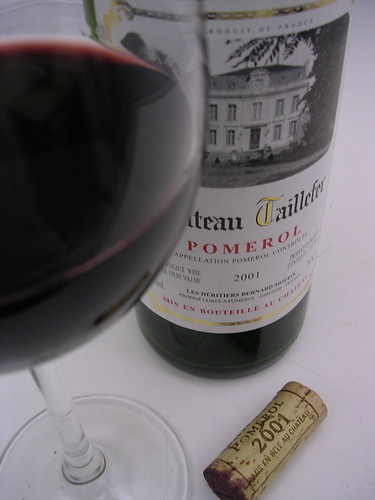
Chateau Taillefer 2001 (Pomerol)

Chateau Taillefer 2001(Pomerol)

Chateau Taillefer is one of the largest producers in the Pomerol region, which is the smallest red wine region in Bordeaux. Merlot is the dominant variety in Pomerols, which generally means (1) they have a higher alcohol content; (2) they have softer tannins; and (3) although top Pomerols evolve well in the cellar, most are ready to be drunk early. Robert Parker notes that restaurants dig Pomerols specifically because they come ready-to-drink.

The PLCB boasts that Wine & Spirits gave this wine 90 points. To borrow a phrase from one of my good friends, I’d take that with a pillar of salt. Parker doesn’t have much love for this chateau. Although he lists Taillefer as a “notable” Pomerol property, he feels that, because it is one of the larger properties, it should be making better wine.

On the nose: Red berry and peppery aroma.

On the palate: The 2001 Taillefer is a blend of 75% Merlot and 25% Cabernet Franc, both of which are supposed to make this wine approachable at an early age. This wine, however, may still be too young to drink. It starts off a bit thin and watery. As it opens up, some red fruit and light raspberry finally emerge, followed by hints of spice, new oak and chocolate. The tannins could be softer and the acidity should be a little lower, but these rough edges are the privileges of youth. There’s not much of a finish. This wine shows some promise; it would be interesting to see how it matures in 3 to 5 years.

On the wallet: This wine is one of the PLCB’s Chairman’s Selections, a designation apparently meant to highlight the PLCB’s “buying power.” The PLCB claims this wine normally goes for $44.99, but thanks to the PLCB you can drive this baby home for the low, low price of $19.99. However, the $25.00 “savings” should not be the measure of whether this is a good deal; the wine needs to stand on its own at $19.99. Pomerols are supposed to come ready-to-drink, but this wine is still a bit too young. Plus, it’s not as gentle or as fruity as a Pomerol should be, which is surprising given that Cabernet Franc is in the mix. A little time may resolve these issues, but you may not have the patience to cellar something from this chateau. This is a good Bordeaux and it has potential. But $19.99 may be slightly ambitious for a wine that is not quite ready to come out of the oven.

On the table: Steak and burgers.

Read More....

June 14, 2006

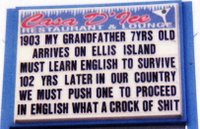
Geno's Signs Could Be Worse, Here's Proof

I don't know. I'm disappointed in you, Joe. I was led to believe you were on the forefront with this sign thing, but it looks like Casa D'Ice in Pittsburgh has you beat, bro. I mean, you don't need a Hummer with a P.A. system if you've got a sign like that. And Casa D'Ice even has more where that came from.

You know, I bet their cheesesteak is even better than yours.

Read More....

WWGD: What Would Geno’s Do?

The Philadelphia Inquirer reported yesterday that Philadelphia’s Commission on Human Relations (“PCHR”) filed a complaint on Monday against Geno’s Steaks alleging violations of two of the City’s anti-discrimination laws: (1) refusing service to someone because of his or her national origin; and (2) posting written notices to the effect that services will be denied on account of national origin. (See Phila. Code §§ 9-1105(a)(1)(a) & (b).)

What puzzles me is this: the inflammatory signs at Geno’s have received national attention, scarring Philadelphia’s image and eroding its reputation as the City of Brotherly Love. People in Philly are pissed at Geno’s owner, Joe Vento; he has received complaint letters and even death threats. So, then, why hasn’t any non-English speaking, cheesesteak lover filed a private law suit against Geno’s?

Normally, if you want to sue for a violation of federal or state discrimination laws, you have to exhaust all of your administrative remedies before you file your lawsuit in court. The administrative process, however, can be long and drawn-out, and often is criticized as an impediment to true legal redress. The Fair Practices chapter of Philadelphia’s City Code, however, does not appear to have such a limitation. Rather, it has it’s own private right of action that does not appear to be limited by an exhaustion requirement. (See Phila. Code §§ 9-1110.)

To put it in plain English (because, of course, that’s what Geno’s wants us to do), if you believe someone discriminated against you in violation of Philly’s Fair Practices Code, it looks like you don’t have to wait for a green light from some administrative agency before you go to court, which is sorta like not having to wait in line to get your cheesesteak after you stumble out of Ray’s Happy Birthday Bar at 2:00 a.m. on a Saturday morning. Plus, the Code allows you to ask for attorney’s fees, which is kinda like having Geno’s pay someone to stand in line to get you a Whiz wit. Capisce?

All I’m saying is, ask yourself this question: If you’ve been wronged by Geno’s antics, why not show them that you know what it really means to be a citizen in this country and hire a lawyer? After all, isn’t that the American way? If that’s the American way, isn’t that what Geno’s would do? And if that’s what Geno’s would do, isn’t that what you should do?

Speaking of the American way, I’ll end this post with a disclaimer. After all, what sign is more American than a good ol’ fashioned disclaimer? Being fond of signs themselves, I’m sure Geno’s would agree.

Disclaimer:

The information provided in this blog post is not intended to be legal advice, but merely conveys general information related to certain legal issues and cheesesteaks. (Keep in mind, I write a food and wine blog. Any lawyer who has time to write a food and wine blog probably isn’t worth listening to for legal advice, especially if the lawyer analogizes discrimination law to standing in line for cheesesteaks.) The information is not guaranteed to be correct, complete or current. PhilaFoodie makes no warranty, expressed or implied, about the accuracy or reliability of the information in this post or at any other website to which this post is linked. (Nobody really reads or links to this blog anyway, but, hey—belts and suspenders, yo.)


This information is not intended to create any legal relationship between PhilaFoodie and the person reading this post. This post is not intended to create and does not create an attorney-client relationship between the reader and PhilaFoodie. (I could be Joe Vento, for all you know. Would you want Joe Vento to be your attorney? I didn’t think so.) This post is not soliciting clients and does not propose any type of transaction. You should not act or rely on any information in this post without seeking the advice of an attorney. (Again, I’m makin’ it up as I go along here. Just in case that wasn’t clear by now.) The determination of whether you need legal services and your choice of a lawyer are very important matters that should not be based on blog posts, especially posts from a food and wine blog, for cryin’ out loud.

Read More....

June 13, 2006

Restaurant Week Dates Set for September

FooBooz reports that the Center City District has scheduled the next Restaurant Week for Sunday, September 10 through Friday, September 15, 2006.

Read More....

June 07, 2006

Rendell Uncorks PA Wine Shipping Plan

The Philadelphia Inquirer reported today that Gov. Rendell has proposed legislation that would allow Pennsylvania consumers to have wine shipped directly to their door from out-of-state wineries. As part of the proposal, the wineries must collect PA’s 18% Emergency Tax (a/k/a/ the “Johnstown Flood Tax”).

This is a good plan.

The Inquirer article, however, implies that the glass is only half full. The article appears to express disappointment with Rendell’s proposal, stating that the “rub” is that the plan includes the consumer paying the 18% Johnstown Flood Tax on direct shipments. This apparent criticism is a bit unfair.

First, the Johnstown Flood Tax had to be part of the deal. In a Feb. 20, 2006 Inquirer article, Rendell said he “would support direct shipments of wine to Pennsylvanians if it can be done with minimal loss of state revenue.” He’s talking about the Johnstown Flood Tax. The state has been feeding from that teat for over 70 years. It ain’t letting go now, if ever. Rendell admitted that the state needs that money. So there was never going to be a direct shipping law that did not include the Johnstown Flood Tax. That’s the political compromise. If people want inexpensive wine, the PLCB has plenty of offerings in their stores. The people who are going to be ordering directly from wineries aren’t going to mind paying the taxes they’ve already been conditioned to pay in exchange for the ability (finally) to choose what to drink.

Second, Rendell’s proposal could have been worse:

  • It could have banned direct shipments altogether. PA’s law was declared unconstitutional on Equal Protection grounds. Banning all direct shipments—from both in-state and out-of-state wineries—would have complied with the U.S. Supreme Court’s decision. Sadly, this is what some other states, such as Alabama, chose to do in response to the ruling. So, at least we’re not Alabama.

  • It could have had the wine being shipped directly to state stores instead of your door. Proponents of this option argued that if direct shipment is allowed at all, the shipments must go directly to the state stores because (1) that’s the only way to collect the Johnstown Flood Tax; and (2) underage kids would be ordering wine. Both of these arguments have been debunked. Taxes can be collected through a license procedure, which is part of Rendell’s plan. That’s how other states have done it, and if you couldn’t figure that one out, you probably don’t deserve to be a state legislator. Also, other states haven’t had any problems with direct shipment leading to underage drinking.

  • It could have made direct shipment even more expensive. My understanding is that if you want to order wine through the PLCB’s Special Liquor Order (“SLO”) process, they tack on a 30% mark-up in addition to the Johnstown Flood Tax. When Rendell signaled that the direct-shipping plan needed to be done “with a minimal loss of state revenue,” it was unclear how the 30% mark-up factored into the equation. If you could order directly from the winery, there would be no need to do an SLO, which would mean lost revenue for the state. While taxes can be collected from the out-of-state wineries through the permit process, the 30% mark-up may be a different story. So, my concern was that the proposal actually would include an increase to the Johnstown Flood Tax to make up for any anticipated loss in revenue from potentially not being able to collect the 30% mark-up. It didn’t. Be thankful.

But there may be a few bugs in Rendell’s proposal. It is not clear from the Inquirer article whether the proposal allows restaurants to order directly from out-of-state wineries. The article says that Pennsylvania wineries would lose their right to ship directly to restaurants. However, Kevin Joyce, the owner of the Carlton Restaurant in Pittsburgh and the president of the Pennsylvania Restaurant Association, implies that the ban extends to out-of-state wineries as well. If Joyce is correct, that could be a problem. First, it may raise further Equal Protection issues. Second, if out-of-state wineries can’t ship directly to restaurants, it could be a disincentive for out-of-state wineries to apply for direct shipping permits. And, ultimately, that could translate into consumers not having that many additional choices, which was the whole point of allowing direct shipment in the first place.

Read More....

May 30, 2006

Yo quiero el filete del queso “Whiz wit,” por favor.

Cheez WhizAccording to an article in today's Philadelphia Inquirer, the neighborhood in which Geno’s Steaks sits has become home to thousands of Mexicans. But apparently Joe Vento, the owner of Geno’s, isn’t happy. So Joe is insisting that his customers order cheese steaks in English. As the pic in the article reveals, Joe conveys this message through two signs that, naturally, are only in English: one sign has a stereotypically pissed-off looking eagle in front of an American flag and declares “This is America. When Ordering, ‘Speak English’”; the other says “Management Reserves the Right to Refuse Service.”

This is going to be fun:

  • It is ironic that Geno’s has signs directing you to order in English given that, in reality, they make you order your cheese steak using magic code words that arguably don’t qualify as English. Remember: a cheese steak with Cheez Whiz and fried onions is a “Whiz wit.” Otherwise, you may be heading to the back of the line, or worse—branded a foreigner.

  • Best quote in the article: “If you can’t say the word cheese, how can I communicate with you . . . ?” I’m just gonna let that one sink in.

  • Joe spends his free time chastising local businesses for hiring illegal immigrants. According to Joe, he’s just saying “what everybody’s thinking but is afraid to say.” Except that Joe likes to say it through the P.A. system in his Hummer as he drives around the neighborhood. No wonder property’s still relatively cheap in South Philly.

  • Joe wants things to be like they were in 1921, when his Italian-born grandfather became a U.S. citizen. His proposal: “Go back to the 19th century and play by those rules.” Ouch . . . . Yeah, I cringed, too. He missed that 1921 was part of the 20th century. Apparently, his math isn’t as good as his English.

Joe may want to rethink his proposal, though:

  • First, Joe admits that even his grandfather had trouble with English. Uh, Joe? If you want things to be like they were when your grandfather came over, but even he couldn’t get the language down . . . ? Ya followin’ me here? Pot? Kettle? Black?

  • Second, according to the Inquirer, there were no meaningful immigration restrictions in the 19th century, except for a bar on Chinese enacted in 1882. I’m gonna go out on a limb here. And say that Joe’s the kinda guy who’d probably be in favor of a few more restrictions than they had in the 19th century. Just a guess.

  • Third, Cheez Whiz wasn’t even introduced until 1952. So if we went back to the 19th century, what would we order our steaks wit? Wait, I’ve got it! Hows about salsa?

Read More....

May 21, 2006

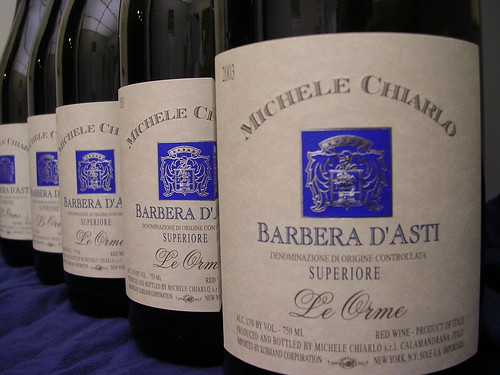
Michele Chiarlo Barbera D’Asti Superiore Le Orme 2003

Michele Chiarlo Barbera D'Asti 2003

On the nose: Although this is an amazingly drinkable wine, especially for the price, the nose it not very impressive. You can detect some red fruit, but the aroma is light.

On the palate: The Barbera grape, which hails from the Piedmont region in Northern Italy, is known to produce a wine with high acidity. Aging the wine in oak, though, (six to eight months in this case) helps to balance out some of the acidity. This light bodied red starts off with bright cherry and raspberry flavors. Although there’s a hint of vanilla from the oak, the wine displays a refreshingly tangy and zesty acidity. The finish is bone dry.

On the wallet: This wine is an incredible value. The PLCB offers a lot of inexpensive wines, but the gamble often doesn’t pay off. This time it did. The Michele Chiarlo goes for a mere $11.99. You are getting a lot for your money, and it will be hard to find a wine this good for the same price or less.

On the table: Typically, oak-aged Barberas are rich and should be paired with more fuller flavored meat dishes. There is not enough oak in this wine to take it to that level, but lighter style Barberas, such as this one, are more versatile and perfect with lighter fare. It's best slightly chilled.

Read More....