July 28, 2007

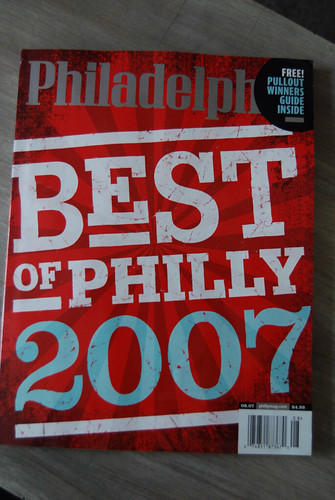
Philadelphia Magazine's Best of Philly 2007 - Food & Drink


It’s that time of year again, folks. The time when Philadelphia Magazine dishes on the things it loves the most about Philly. "Essential" and "authoritative," Phily Mag’s “Best Of ” issue is a Philadelphia institution. Editor Larry Platt says it best: "We don’t just try to reflect your world and tell you what you like; instead, we try to influence your world, by spending all year combing the region in order to tell you what you should like.” This year, Philly Mag returns to some of the more basic categories and gives you something extra—a handy little “black book” that you can tear out and take with you anywhere you go, making the 2007 Best Of issue a must read.

Without further ado, here are a few highlights from Philadelphia Magazine’s Best of Philly 2007, Food & Drink:

Osteria's Wood Grilled Halibut with Marinated Fennel

Best New Restaurant, City: Osteria. Given the number of high caliber restaurants that opened this year, this choice could not have been easy for the folks at Philadelphia Magazine. Indeed, April White confesses there was “heated debate” over this category. But I could not agree more with this choice—Osteria captures the authenticity of the Italian dining experience by delivering high quality Italian food in a casual yet polished atmosphere. From the “fine handmade” pastas to the “ethereal” Polenta Budino, there is much to love about Osteria. Check out my Osteria review here.

Snackbar's Beef Gyoza

Best Chef: Jonathan McDonald. Philly Mag likes Snackbar's Johnny Mac for the same reason I do: He’s the MacGyver of the kitchen when it comes to successfully combining seemingly incompatible ingredients. The guy is fearless. Give McDonald any three random ingredients and you can guarantee he’ll rescue your palate from boredom. You can find my Snackbar review here.

James' Cornish Hen

Best Entrée: The Roast Chicken at James. I know what you’re thinking. Chicken? Believe me, I, too, would be scratching my head had I not eaten Chef Burke’s Cornish game hen myself and written about it here. Burke’s secret is to select high quality meats and to cook them slow and low to concentrate the flavors.

Best Indian: Tiffin Store. I’ve taken great pleasure in introducing my friends to Tiffin Store. The downside to having done that, of course, is that it now takes me longer to get my delivery because the place is busier than ever. Quality Indian food at reasonable prices, you say? You better believe it.


Best Food Trend: The Sequel. This year, Philly took a page from Hollywood’s playbook and adapted it to the restaurant scene. Daniel Stern’s “Empire Strikes Back” with Rae. Marc Vetri, Philly’s “Godfather” of Italian cuisine, “pulls [us] back in” with Osteria. And thanks to Tinto, Jose Garces now has “Two Towers” on the Philly tapas scene. Next year’s Best Food Trend? I’m thinking it could be The Trilogy. After a diversion to Chicago to open Mercat later this year (which will feature Barcelonan-style tapas and charcuterie), Garces will come back to Philly to open Chilango, a Mexico City-inspired taqueria that (I kid you not) will pay tribute to Mexican professional wrestlers. Though it sounds more like “Nacho Libre,” if the success of Amada and Tinto are any indication, Chilango will herald the “Return of the King.” Either way, I’m getting my ticket in advance.

Want to know who won the Best Cheesesteak, City category? How about Best New BYOB? Best Pizza? Pick up your own copy of the Best of Philly 2007 edition of Philadelphia Magazine. It hits newsstands on Monday.

Read More....

July 26, 2007

University City Dining Days Are Here

University City Dining Days are going on right now—from July 26, 2007 to August 2, 2007.

The University City District has taken the concept of a restaurant week to the next level. Instead of all restaurants offering three courses for one price, it’s three courses and three prices. Each participating restaurant is offering a three course meal at one of the following price levels—$30, $25 and $15. Check out UCityPhila.org for participating restaurants and to find out the price level at which each one is participating.

Also, Marigold Kitchen has extended its three-course $30 Dining Days menu to August 9. (h/t to FooBooz).

Read More....

July 24, 2007

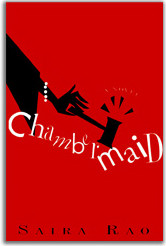
Chambermaid

Two of the topics that govern my life are law and food. The two don’t often intersect, but when they do, I’m in my glory.

That explains why I enjoyed Saira Rao's first book, Chaimbermaid. Rao is a lawyer who clerked for the Third Circuit Court of Appeals here in Philadelphia. After her clerkship and a stint at a large law firm in New York, she decided to risk it all to become an author. If Chaimbermaid is any indication, Rao made the right choice.

Chaimbermaid is a fictional account of a judicial clerk, Shelia Raj, and her experience at the Third Circuit Court of Appeals here in Philadelphia. A lot of the action takes place in Philadelphia restaurants, including such gems as Rouge, The Continental, Jones, Las Vegas Lounge and Ralph’s. It’s interesting to see the perspective of these restaurants from a character who is not a Philadelphia native. And Shelia’s objectivity is refreshing. For example, Shelia, who hails from New York, is annoyed by the velvet rope elitism practiced at Rouge and is not a fan of The Continental’s “Oriental Ginger Noodle Salad.” Yet, she’s grounded enough to appreciate the simple comforts of the mac-and-cheese and deviled eggs at Jones.

The book has received a lot of press due to its so-called scandalous, fly-on-the-wall perspective of what happens inside the chambers of a federal appeals court judge. This aspect of the book certainly is a draw, especially to us lawyer types, and does carry its share of the book’s humor. But the press’s reaction to all of this is a bit extreme.

Perhaps I have been around the block a few too many times or am thicker skinned than most, but—fiction or not—the colorful behind-the-scenes tales are more silly than scandalous, especially compared to the absurdity of law firm life as told by folks such as Opinionistas and Anonymous Lawyer. Moreover, Rao’s stories did not diminish my respect and reverence for the court. In the end, all judges are human beings. And Rao, in fact, demonstrates that it takes an exceptional kind of human being to be the effective judge that Judge Friedman is in Chambermaid.

In addition, there’s a lot more to Chambermaid than the gossipy goings-on behind chamber doors. For example, one of the key plot threads involves a high-profile death penalty case Shelia has been assigned. Death penalty jurisprudence can be complicated stuff (I know; I represented a death row inmate back in the day). But Rao not only manages to make death penalty jurisprudence approachable, she also makes it engaging.

Yet, Chambermaid is still an escape. Rao’s style is light, witty and entertaining. And her book is chock full of politics, love and other tumultuous happenings in the life of a young lawyer struggling for direction and identity. Chaimbermaid is the perfect beach read for anyone interested in a young professional’s perspective on law, Center City or the Philadelphia dining scene.

Join Saira Rao today (Tuesday) for a rare appearance here in Philadelphia. She will be reading exerpts from Chambermaid and signing books at Barnes & Noble (1805 Walnut St.) at 7:00 p.m. For more info, check out SairaRao.com.

Read More....

July 18, 2007

Cooney Responds in the "Nick of Time"

I had planned to sit down with Nick Cooney, the director of Hugs for Puppies, for my “Liver Let Die” article that was published in the July 5, 2007 issue of the City Paper. However, Cooney failed to show for the interview.

After the article went to print, Cooney contacted me to explain that he missed our meeting because he was in jail for failing to respond to a subpoena issued in a lawsuit related to animal testing protests, a charge Cooney says the judge dismissed.

I recently sat down with Cooney to get his take on London Grill co-owner Terry McNally’s characterization of Hugs for Puppies’ protesting tactics and my experience at Hudson Valley Foie Gras. Read my Q&A with Cooney called “Nick of Time” in this week’s City Paper.

Read More....

Philly Represents on Wine Spectator’s 2007 Restaurant Awards List

Every year Wine Spectator celebrates restaurants that “show passion and commitment when it comes to wine.” This year Wine Spectator awarded the Award of Excellence—an award recognizing lists that have a well-chosen selection of at least 100 wines by quality producers and a thematic match to the cuisine—to four additional Philadelphia restaurants: Flemings Prime Steakhouse and Wine Bar (Radnor), Fogo de Chao (1337 Chestnut), Le Castagne (1920 Chestnut) and The Melting Pot (King of Prussia). A run-down of most of the past Philly winners can be found here.

But New Jersey seems to have kicked our cork. Seven additional New Jersey restaurants earned the Award of Excellence this year: Bacchus Chophouse & Wine Bar (Fairfield), Basil T’s Brewery & Italian Grill (Red Bank), Bobby Flay Steak (Borgata, Atlantic City), Buona Sera (Red Bank), Hunan Taste (Denville), and Mahogany Grille (Manasquan) and The Melting Pot (Westwood). Not only that, but two past New Jersey Award of Excellence winners—Chakra (Paramus) and Old Homestead (Borgata, Atlantic City)—were upgraded to “Best Award of Excellence,” which recognizes lists of 500 or more wines that show either vintage depth or excellent breadth spread over several winegrowing regions.

Hey, for what it's worth, at least we beat Delaware; they didn’t have any new additions or upgrades this year.

Congratulations to this year's winners.

Read More....

July 05, 2007

Foie Gras - A Bird's Eye View


I’ve spent a great deal of my spare time over the past year reading all of the scientific studies and articles regarding foie gras production I could get my hands on, including the studies found here, here and here. I did so because I wanted to inform myself before deciding whether the production of foie gras is inhumane.

Recently, I even toured Hudson Valley Foie Gras in New York, the largest of the three foie gras farms in the United States (pictures from the farm visit are available here). I wrote about my experience for the City Paper in an article called Liver Let Die that was published this week. I managed to snag a quote from famed restaurateur Danny Meyer for the article. I believe this is the first time he has ever taken a stance on foie gras in any publication, so this was a major scoop.

After reading all of these studies and articles and visiting the farm, the bottom line is this: the ducks are not being mistreated and the process by which they are fed (gavage) is not inhumane. Period.

Don’t take my word for it; read the studies and visit the farm yourself. And even if you still disagree, that’s ok. Just keep your opinion off my plate.

Read More....

June 18, 2007

An Update on the Chops v. LaBan Lawsuit

There have been two significant developments in the Chops v. LaBan lawsuit. The first is that The Philadelphia Inquirer and Craig LaBan have filed an answer, which strikes a serious blow at Plotkin’s claims. The second is that Plotkin’s attorneys took LaBan’s deposition…and videotaped it.

The Answer

The assertions in the Inquirer and LaBan’s answer—one of which Plotkin now admits is true—do not bode well for Plotkin.

LaBan denies that he was served a “steak sandwich without the bread,” as Plotkin alleged in the complaint. Rather, LaBan asserts that he was served “Steak Frites.” And LaBan has the receipt to prove it. LaBan further alleges that “[t]he waiter serving LaBan and his lunch companion described the steak served as ‘Steak Frites’ as a ‘strip steak.’” Presumably, LaBan dines with others so he can taste multiple dishes in one sitting. But the ancillary benefit of having done so here is that LaBan now has a corroborating witness, illustrating that this practice is something other food writers leery of libel suits would be wise to employ. Moreover, LaBan states that “the steak Chops served as ‘Steak Frites’ was sliced from the same piece of meat purchased by the restaurant for the strip steak it serves at dinner as strip steak.” It is not clear from the answer how LaBan knows this; however, it is important to note that this assertion does not start off with the phrase “Upon information and belief…”—a somewhat tepid predicate often used to hedge your bets when you’re not 100%.

Surprisingly, Plotkin has recanted his “steak sandwich without the bread” story and now admits that LaBan ordered and ate “Steak Frites,” a fact that probably should have been discovered before the complaint was filed given that it’s the basis of his lawsuit. Although Plotkin denies the rest of the above-mentioned assertions, this could signal the beginning of the end of his lawsuit. It appears from the pleadings that, at a minimum, LaBan believed that the meat he was eating was strip steak. And if that’s what LaBan believed, Plotkin will not be able to prove “actual malice”—the intent requirement in a libel claim asserted by a public figure, which is what Chops will most likely be held to be. Keep in mind that the “actual malice” standard is subjective, not objective. In other words, it doesn’t matter what a reasonable person would have believed; it only matters what LaBan actually believed. The hurdle for Plotkin is extremely high.

The Deposition

The second development in the case, however—which Steve Volk wrote about today online at Philadelphia Weekly—is a little more sensational. And it shows that this lawsuit may end up being less about truth than about strategy. Plotkin recently noticed LaBan’s deposition, which is a bit early in the case but not improper. But instead of seeking the more traditional type of deposition, where only the deponent’s words are stenographically recorded, Plotkin wanted the deposition to be videotaped.

The defendants sought a protective order to prevent it. “LaBan’s anonymity is important to the process by which he reviews restaurants,” the defendants argued to the court. “If a restaurant knew Mr. LaBan was in its dining room, it might put on a show for him that would not be provided to the general dining public.”

In opposing the defendants’ motion, Plotkin denied that LaBan’s identity was a secret by stating the following:

Defendant LaBan has not only appeared in public recently to promote a book he wrote on behalf of co-defendant The Philadelphia Inquirer, he even permitted another journalist on a widely-read Philadelphia restaurant review website to publicize a photograph of half his face. Anyone with an interest in the “trade secret” of his identity certainly would have attended his book signing, seen his face, listened to his voice, and studied the photo available online.

The journalist to whom Plotkin is referring is yours truly (at least I wasn’t called a “sham blogger”). The website to which he’s referring is this one. And the photograph to which he’s referring is the one LaBan allowed me to shoot at his book signing in December 2006 and post on my blog.

First, I was not happy to discover that I was referenced in a document filed in this lawsuit (though I appreciate that Plotkin and/or his attorneys extended the professional courtesy of not identifying me or my blog by name). Second, my photograph technically does not show half of LaBan’s face; it shows only his lips and his goatee. And to put it in context, my photograph shows less of LaBan’s face than you see in his recently-shot video, “Cheeseburger, I Hold,” or the screenshot accompanying his article about the making of the video (pictured above). Third, contrary to Plotkin’s assertion, the photograph actually demonstrates (as does the video) that LaBan and the Inquirer, in fact, do take great care to protect LaBan’s identity. LaBan showed up at the book signing wearing a hooded cape, a curly wig and a Zorro mask, and he wears the same wig and mask in the video. Wearing a disguise is exactly how you protect your identity, not how you reveal it.

The court technically granted the defendants’ request in part, but denied the most critical aspect of their motion. The judge’s order allows LaBan’s deposition to be videotaped. And although the video will be kept confidential until trial, the order does not prohibit the video from being played at the trial, which could threaten LaBan’s anonymity if the entire proceeding is left open to the public.

In Volk’s article, Plotkin’s attorney says that the videotaped deposition took place on June 5 and that they expect to use it at trial. Plotkin’s attorney claims that the case isn’t about LaBan’s anonymity (though it does play a key role in his complaint as LaBan’s alleged motive for his less than stellar review). Rather, Plotkin’s attorney claims their “interest is in what [LaBan] did wrong and in encouraging him not to do it again.”

However, to the trained or skeptical eye Plotkin’s insistence on videotaping LaBan’s deposition looks like a strategic move designed to leverage a settlement, especially given LaBan’s devastating answer. Videotaped depositions are not all that common, and the need for one in a case like this is questionable (there’s nothing to suggest, for example, that LaBan would be unavailable for trial). Plotkin knows that anonymity is a vulnerable spot for LaBan. So, it’s not surprising that Plotkin’s attorney is attempting to apply some pressure; it’s what lawyers do. But in light of the discussion above and Plotkin’s own admission in his complaint that he previously threatened (“jokingly,” of course) to reveal LaBan’s identity when he visited The Palm in 2002, Plotkin’s insistence on videotaping LaBan’s deposition just leaves a bad taste in your mouth.

Actually, all of this is good news for LaBan. Plotkin’s whole lawsuit was based on LaBan having a steak sandwich without the bread. And LaBan chopped one of his legs off with two words: Steak Frites. If the rest of the above-mentioned assertions in LaBan’s answer are verified through discovery, the game is over for Plotkin. The fact that Plotkin had to play the video deposition card shows that he’s on the ropes. And although it’s troubling that the tape is out there, it’s unlikely that it will ever see the light of day.

Photo Credit: A still from the video of Craig LaBan recording "Cheeseburger, I Hold." Video shot by Chris Jolissaint.

Read More....

June 17, 2007

Neighborhoods, Chains and Outdoor Dining

Last Thursday City Paper came out with its 2007 Summer Dining Guide. This year it asked its writers to take its readers “on a culinary tour through some of the city’s most appetizing neighborhoods.” I wrote the piece on my neighborhood, the booming Washington Square West. I didn’t have room to talk about all of the restaurants in the area. So, if you have something to say about the ones I left out (or even the ones I did discuss), let me know here in the comments.

Last week I also wrote a piece for my WineCHOW column on ClassicWines.com about outdoor dining called Summer in the City. Most of the piece was composed while eating the juicy pork chop at 707 Restaurant & Bar I referred to in the above-mentioned City Paper piece. Ah, the beauty of multi-tasking.

Also, don’t forget to check out last week’s WineCHOW article called Disdain for the Chain, where I ask whether there's any upside to a chain moving into your neighborhood. Regardless of your view on chains, you have to read the story about my Italian relatives at the beginning of the article. It is 100% true.

Read More....

June 16, 2007

Stories From Reading Terminal Market – History In the Making


When Marisa first told me about her new blog project a few months ago, Stories From Reading Terminal Market, I was blown away by the concept. Marisa spends time at Reading Terminal Market collecting “stories, memories, recipes and fond recollections from the experiences of individuals.”

The idea of blogging one of Philadelphia’s most notable institutions is fascinating enough. But what’s interesting to me about the project is that it is the perfect combination of the past and the present. It preserves the history of the Terminal while making a present-day story out of the act of cataloguing that history. Add in Marisa’s engaging storytelling and the table is set. You’ll be asking for second helpings before you’re through with the first plate.

If there was any blog out there that screamed to be turned into a book, Stories From Reading Terminal Market is it. A word of advice to the literary agents reading this: don’t wait too long to get Marisa under contract. It’s only a matter of time before she’s making herself, and some publishing company, an obscene amount of money.

Photo by Marisa McClellan

Read More....

June 10, 2007

James

James

It felt like we were intruding on a private moment. It was 5:30 p.m. on a cold February evening when we walked into James for an early dinner. There was no music playing in the restaurant. No one was even humming a tune, at least none that we could hear. But Chef Jim Burke and his wife, Kristina, were slow dancing in the restaurant’s intimate lounge. Chef Burke deftly twirled Kristina in front of the crackling fireplace. They smiled and laughed playfully. A small crowd, mostly James employees, watched silently as a well-equipped photographer snapped pictures of our two dancers. But the enchanted couple barely seemed to notice as they glided through the room to their own ballad. After one final spin and a longing gaze, it was time to get back to work. Chef Burke headed to the kitchen and Kristina returned to the elegant dining room to check on preparations for the evening’s service.

Risotto alla Kristina

The restaurant had been open only two months when Chef Burke and Kristina danced to their silent music, but the song of James’s success was already starting to be written. The first note was the photographer that night. He was taking pictures for the June 2007 issue of Food & Wine magazine in which James’s signature dish was featured, Risotto alla Kristina—a scrumptiously soupy Venetian-style risotto made with Prosecco, orchid oil and raw oysters that are folded in at the end of the preparation to give them just a touch of warmth. Before the Food & Wine piece hit the streets, though, other influentials formed an inspirational chorus: Philadelphia Magazine, City Paper, Philadelphia Weekly, Philly Style Magazine, aroundphilly.com—each a unique voice, but all singing generally in tune. Then came Craig LaBan’s review. The deep, resonate tones of LaBan’s rarely-heard “three bells” and his lyrically penned prose made the symphony complete. Now, everyone can hear the tune that was guiding Jim and Kristina’s steps on that cold evening back in February. And the reservation book shows it; a thirty-two person wait list is not unheard of and the lounge is packed with diners clamoring to eat from the slightly abridged bar menu.

Porcini & Early Blueberry Stuffed Tortelloni, Thyme

Such high accolades may seem surprising given that this is their first restaurant venture, but this couple has paid their dues. Kristina’s management stints have included the recently-closed Pasion!, Striped Bass and Miel Patisserie. And Chef Burke’s pedigree includes Vivo Enoteca in Wayne and Stephen Starr’s short-lived Italian restaurant, Angelina.

Hand Cut Pappardelle with Duck Ragu, Shaved Chocolate & Orange

But the one restaurant on Chef Burke’s resume you could probably guess just by tasting his pasta is Vetri. Chef Marc Vetri is renowned for crafting authentic, homemade pasta. And it’s clear that Chef Vetri passed these artisan skills on to Chef Burke because the pasta at James is pitch perfect. Burke’s skills do not stop there; he’s also a virtuoso when it comes to combining flavors to strike creative culinary chords. The espresso, for example, he added to the winter menu’s savory Sweet Potato Ravioli with Oxtail Ragu gives the dish depth and allows the sweetness of both the filling and red wine sauce to emerge. Similarly, the delicate earthiness of the porcini mushrooms in this season’s Stuffed Tortelloni highlight the bright blueberry sauce. And, of course, the synergy between the mild orange and chocolate flakes shaved tableside in his popular hand-rolled Pappardelle with Duck Ragu makes this dish a masterpiece.

Cornish Hen

Burke’s meats, too, should not be overlooked. His secret is to select fresh, quality cuts of meat and not to overly prepare them. Last season’s pork loin, for example, was prepared by first gently searing it and then slowly cooking it on a low heat to concentrate the flavors and hold in the juices. This season’s Cornish Game Hen receives similar respect—delicately crisp on the outside while tender, juicy and flavorful on the inside. And the locally grown vegetables that were still in the ground only a few days earlier serve as the perfect complement to this hen.

Brown Ale Mousse, Almond Cake and Almond Toffee

The desserts at James trend toward the savory side, but they often incorporate citrus elements for a little sweetness and some refined contrast. The addictive Chocolate Terrine, which is made with bittersweet chocolate, sits on crisp olive oil fried bread and is topped with Fleur de Sel, is accompanied by some refreshing quince paste. Also, the rich Brown Ale Mousse, which sits on a pillowy almond cake and is topped with a crisp, toasty almond toffee, comes with sliced pears. Those with more of a sweet tooth can add a scoop of homemade gelato, which have included exciting flavors such as Cardamom and Black Walnut from Green Meadow Farms.

Chocolate Terrine

If there’s anything about James that could strike a challenging chord for some, it would be the portion size and price. The portions are not large; they’re elegantly sized, probably more in line with the amount of food we should be eating and not what we’ve been conditioned to believe is necessary. So, those looking for never-ending pasta bowls should eat elsewhere. That said, the meals I’ve had at James have been satisfying and I’ve never left hungry or wanting more. The prices at James are in line with what you’d expect to pay at other fine restaurants in Center City. And the stylish food and professional and attentive service at James are definitely worth the money. But the prices mirror the grace and sophistication of the couple’s creation, making James more of a special occasion destination than an everyday hangout.

Much like a poetic symphony from the Romantic era, James seems destined to become one of the classics. Center City will be singing and dancing to Jim and Kristina’s music for a long time to come.

James
824 S. 8th Street
(215) 629-4980

For more pics, check out the James set on my Flickr page.

Read More....

May 31, 2007

The Status of Direct Wine Shipping in Pennsylvania

In November 2005, the Pennsylvania law that allowed in-state wineries to ship wine to Pennsylvania residents but prohibited out-of-state wineries from doing so was declared unconstitutional. Last June, Governor Rendell proposed legislation that would allow Pennsylvania consumers to have wine shipped directly to their doors from out-of-state wineries (which I blogged about here). As part of Rendell’s proposal, the wineries would be required collect PA’s 18% Emergency Tax (a/k/a/ the “Johnstown Flood Tax”).

Ever wonder what happened to Rendell’s proposal? The PA legislature put it on the back burner. An article in today’s Pittsburgh Post-Gazette explains why:


Because the buyers of Pennsylvania wines make up such a minority of overall wine consumers, and account for such a small percentage of the state’s wine and spirits business, the issue isn't on the front burner in Harrisburg.

Instead, the respective House and Senate committees -- the Liquor Control Committee in the House, and the Law and Justice Committee in the Senate -- are dealing with beer-related issues: whether Sheetz and other convenience stores and supermarkets can sell beer to go, and whether distributors can sell 18-packs.


The PA legislature is clearly a few bottles shy of a case on the direct shipping issue. This proposed law isn’t about Pennsylvania wines or those who buy them. It’s about making sure the state can collect the 18% Johnstown Flood Tax on non-Pennsylvania wine that is purchased through the Internet and shipped into PA. What’s even more bizarre is that the legislature appears to be oblivious to the fact that these Internet wine sales are happening right now. That’s right—currently, there are Internet sites out there that will sell you wine and ship it directly to your door in PA. So, while the legislators wrestle with the heady issue of whether PA’s archaic liquor laws will allow WaWa to sell a six of Bud, the state is hemorrhaging money in lost taxes as its residents take advantage of wine deals on the Internet.

Not having to pay the Johnstown Flood Tax when they order wine over the Internet sounds like great deal for PA consumers. But if getting burned on lost revenue isn’t enough to convince the legislature to move this issue to the “front burner,” perhaps they should no longer be allowed to operate the stove.

Read More....

Pocket Sommelier - Mercato

Short Rib Gnocchi

In today’s City Paper you’ll find the latest edition of Pocket Sommelier. I pair wine with two dishes at Mercato: the Ricotta Gnocchi in a Short Rib Ragu; and the intense, flavorful and organic Braised Jamison Farm Lamb Shank that was recently added to the menu.

Most people bring one bottle of wine to a BYOB. But more often than not, that one wine will not match every course. It may seem silly to bring two or even three bottles of wine to a restaurant, but the wrong wine could ruin a dish. For example, two of the Chiantis we brought went well with the gnocchi, but they were a complete mismatch for the lamb.

However, the Cab I alluded to at the end of my post about the Philly Wine Festival—the Alexander Valley Vineyards Cabernet Sauvignon Wetzel Family Estate 2004—paired amazingly well with the lamb. What’s exciting about this wine is that it has the same type of rich, spicy profile found in some of the more celebrated California Cabs, but it’s one third the price.

Braised Jamison Farm Lamb Shank

Carnivores with a conscience will not want to miss the chance to savor Mercato's new lamb dish. The meat was so tender it spilled off the bone before my fork even touched it. And Jamison Farm, located in Latrobe, PA, is known far and wide for raising its lambs on a diet that is 100% natural and free of hormones, antibiotics, herbicides and insecticides. I tasted a slight hint of anise in this dish, a flavor I could not attribute to any of the ingredients. Not knowing what it was drove me mad. When I later asked Chef de Cuisine Mackenzie Hilton what it could be, she posited that it might have something to do with what the lamb had eaten. Now, that’s organic.

For more pics, check out my Mercato set on Flickr.

Read More....

May 21, 2007

The 2007 Philadelphia Wine Festival Wrap-Up

Chateau Margaux 2001

Belated congratulations to the PLCB and Philadelphia Magazine for successfully hosting the 2007 Philadelphia Wine Festival. This year’s festival had around 40 fewer vendors and was a little more expensive than last year. However, the festival’s central location at the Mariott Hotel in Center City, the food provided by DiBruno’s (including the quince paste covered cheese and the bruschetta with freshly-cut prosciutto) and the never-ending courtesy cups of spring water provided by Panna were all improvements that helped to make this year’s festival better than the last.

Here are some of the notable wines at the festival, with a few thoughts and surprises along the way.

The First Growth Bordeaux

This year there were three Bordeaux at the festival, all of which were First Growths: Chateau Haut Brion 2001, Chateau Margaux 2001 and Chateau Mouton Rothschild 2003. First Growths are considered to be among the best wines in the world. If you’re a wine enthusiast, it’s important to taste First Growths because they are the wines that Cabernet Sauvignon producers all around the world look to as their benchmark. Though young, these three wines drank like heaven and were not to be missed.

Chateau Mouton Rothschild 2003

--Chateau Mouton Rothschild 2003 (PLCB No. 20296, $312.39): Aggressive, enamel-stripping tannins, but powerful, rich blackberry and cherry flavors lie underneath waiting to emerge; too young to be approachable now, but a treat to preview nonetheless.

--Chateau Margaux 2001 (PLCB No. 19342, $169.29): Flowery nose; softer and inviting; complex and nuanced structure of cassis, plum and dark berries systematically unfolding through a long finish.

--Chateau Haut Brion 2001 (PLCB No. 20098, $170.19): Grand and opulent; signature dark berries, cherries and spice; calculated and balanced structure with an endless finish.

Chateau Haut Brion 2001

The First Growths, though, highlight an important issue about the festival’s pricing structure. Like past years, this year’s festival employed a two-tiered pricing system: the VIP Tasting, which cost $225 and began at 6:00 p.m.; and the Grand Tasting, which cost $125 and began at 7:30 p.m. In addition to getting an hour and a half head start, the VIPs also got to experience special Showcase wines at most of the tables, including all of the First Growth Bordeaux. The Grand Tasters, however, did not.

The two-tiered system is a double-edged sword. On one hand, it opens the event up to more people than festivals with one-tiered pricing systems such as this year’s Wine Spectator’s festival, which charged a flat $200 for everyone. On the other hand, one of the main reasons to go a wine festival (if not the main reason) is to taste the cream of the crop, wines you normally wouldn’t buy. That means the First Growths. To be fair, there were plenty of exciting wines at Philly’s festival for the Grand Tasters to enjoy. But it’s unfortunate that these three important wines were not poured for the Grand Tasters.

The Italian Wines

Italian wine lovers flocked to the Gaja table, which featured two wines: the Gaja Barbaresco 2001; and a Super Tuscan, the Ca’ Marcanda Magari 2004. The full-bodied Barbaresco had wonderfully soft tannins with notes of lilacs, strawberry and blackberry, while the Super Tuscan presented rich black currants, spice and a silky, round finish.

Pio Cesare

Directly adjacent to the Gaja table was Pio Cesare, which featured a Barolo D.O.C.G. 2001 (PLCB No. 4958, $49.99); and a Barbaresco D.O.C.G. 2000 (PLCB No. 23912, price not available), among others. The Barolo, while still a little closed off, was rich, silky and lingered for minutes. The Barbaresco had smooth tannins and revealed dried plum, earth and spice.

The Pennsylvania Wines

The Philly Wine Festival is always a great opportunity to check in with two local wineries, Blue Mountain and Chaddsford. Each winery produces a Meritage (sounds like heritage), an American version of a Bordeaux, both of which I’ve always found to be somewhat challenging. However, Blue Mountain and Chaddsford presented wines at this year’s festival that were exciting and surprising.

Blue Mountain Merlot 2005

The wine Blue Mountain presented that piqued my interest was its 2005 Merlot. What’s exciting about this wine is that it is varietally correct. Don’t dismiss all Merlot because of one line of dialogue in Sideways, folks. If Merlot is not overly corrupted by the winemaker, it can taste and smell similar to Cabernet Sauvignon, which includes having Cab’s signature fingerprint of green peppers on the nose and palate. And Blue Mountain’s 2005 Merlot has that classic green pepper aroma and taste. It’s refreshing to see that Blue Mountain has the courage and skill to allow Merlot to be itself. Blue Mountain’s 2005 Merlot has not yet been formally released, but if you’re interested, you may still be able to snare a bottle of it at the Blue Mountain store in Reading Terminal Market. It has an $18 dollar price point.

The two Chaddsford wines that were the most interesting were the 2004 Due Rossi and the 2005 Pinot Noir. The Due Rossi is a 50/50 blend of Sangiovese and Barbera. This wine showed surprising structure and complexity with layers of wet earth, red berries, tobacco and coffee. The Due Rossi’s price point is in the $25 range. Chaddsford takes a subdued Old World approach in crafting its 2005 Pinot Noir. The nose did not have the intense fragrance of unswept barn and dried rose petals that is characteristic of Old World style Pinot Noirs, but the wine did have a welcomingly delicate and subtle palate.

The California Wines

PLCB Chairman Patrick J. Stapleton III may not have been a wine enthusiast prior to becoming Chairman earlier this year, but he apparently knows his stuff now. Shortly after arriving at the festival, Chairman Stapleton made his way to the Silver Oak table, where he enjoyed the Silver Oak Napa Valley Cabernet Sauvignon 2002 (PLCB No. 011663, $99.99).

PLCB Chairman Patrick J. Stapleton III

The nose on this wine was intense and evoked a very specific smell I experienced every August in my youth when my family and I would go camping in Bedford County—dense bramble and meadow after an early evening rain. But the palate—while full of the Silver Oak's familiar rich oak and dense, dark fruit—lacked some of the nuances of the 2001.

Cakebread Cellars Cabernet Sauvignon 2004

It’s hard to find a California Cab as plush and as fat as a Cakebread. Its 2004 Cabernet Sauvignon (PLCB No. 11705, $55.99) is no exception. A blend of 87% Cabernet Sauvignon, 12% Merlot, 1% Cabernet Franc, this soft and chewy wine was bursting with rich dark fruit, spice and caramely oak. It’s not the shyest of pours, to be sure, but that’s part of the fun.

There was another enjoyable Cab at the festival that had an impressive flavor profile for its price point. But because I have other plans for this wine, I’ll save the discussion for another day, closer to the end of the month.

Again, cheers to the PLCB and Philadelphia Magazine for hosting a successful event. For more pics, go to the 2007 Philly Wine Festival set on my Flickr page.

Read More....

May 15, 2007

The Truth About Foie Gras

Rubber Ducky

My most recent WineCHOW column over at ClassicWines.com is called “The Truth About Foie Gras,” and it highlights the scientific studies by Dr. Daniel Guémené and others that debunk many of the claims activists use to argue for a ban on the sale and/or production of foie gras.

I expect some fallout over the column, especially from my vegan and vegetarian friends. But one of the themes of the article that even those who enjoy a vegan or vegetarian lifestyle should be able to appreciate is this: Personal beliefs are one thing, but when it comes to legislating those choices on others, the science should support the claims being made.

The part of the article that may be harder for some to swallow, though, is that many of the claims used to justify foie gras bans simply are not all they're quacked up to be.

Read More....

May 13, 2007

Philly Restaurants Are Going to the Dogs

Max
I’ve been looking for an excuse to post a picture of our dog on this blog for quite some time (his name is Max and he’s a Norwegian Elkhound, in case you were wondering). And thanks to Joe Sixpack and his Daily News article about bars that allow dogs in their outside seating areas, I finally have that excuse. (h/t to FooBooz and MenuPages Blog)

Joe Sixpack found eight Philly-area restaurants with outdoor seating that allow you to enjoy a brew with Man’s best friend:

• Le Bus, 4266 Main St., Manayunk.
• London Grill, 2301 Fairmount Ave., Fairmount.
• White Dog Cafe, 3420 Sansom St., University City.
• Bliss, 224 S. Broad St., Center City.
• Caribou Cafe, 1126 Walnut St., Washington Square West.
• Newportville Inn, 4120 Lower Road, Newportville, Bucks County.
• Triumph Brewing, 400 Union Square, New Hope, Bucks County.
• Four Dogs Tavern, 1300 Strasburg Road, West Chester, Chester County.

A newly-opened restaurant in Rittenhouse Square, Tavern 17, takes it one step further. In addition to offering dog-friendly outdoor dining, Tavern 17 has unveiled a special menu of Canine Delights for your pooch.

Sadly, because our dog is a teetotaler and can be a handful when there’s food around, it’s unlikely that I’ll allow him to join us at any of these places.

Kitty

However, if you know of any restaurants that allow cats, please let me know—my cat is a well-behaved lush with an affinity for Chardonnay. (Don’t worry folks. I’m just kidding; the little snob refuses to drink anything but CATeauneuf-du-Pape.)

Read More....